



Introduction to Leg Workouts
Leg exercises, which focus on the lower body to maintain mobility and improve general agility, have therefore always been a crucial component of all integrated workout regimens. Undoubtedly, having strong legs will enable a person to perform a variety of activities, such as lifting, leaping, and even just walking and jogging.
You gain stability, strength, and endurance in all of the main leg muscle groups. Training your legs will provide you with several advantages, such as:
- Development of strengths
When performing leg exercises, the majority of the lower body’s key muscles are used. Your strength will increase thanks to these muscles, which are also helpful for everyday tasks and a variety of sports.
- Enhanced balance and stability
This will improve general balance and stability and lower the chance of falls, which might result in injuries, particularly in older adults.
- Burned calories more
Leg workouts are effective for fat reduction and control because they enhance caloric expenditure due to the big muscle groups used.
- Fitness in function
Leg training helps to improve everyday tasks and make them simpler and less taxing since it mimics what you often perform. Additionally, by strengthening core stability, it will enhance postures.
- An increase in athletic performance
Stronger legs translate into speed, strength, and agility – qualities that are crucial for a variety of athletes participating in various sports and workouts.
Your strength, endurance, and general fitness will all improve dramatically if you include a variety of leg exercises in your workout. Prioritizing leg exercises creates the foundation for a suitable and effective workout program that is good for the whole body.
Beginner-Friendly Leg Exercises
For people who are new to fitness or are attempting to ease into leg exercises, the leg routine’s foundational exercises are a great way to develop strength, balance, and confidence. With their emphasis on fundamental motions that target key muscle areas without the need for large weights, these workouts are simple to do and efficient for all skill levels.

Bodyweight Squats
Bodyweight squats are a simple workout that strengthens your quadriceps, hamstrings, and glutes. It is an excellent beginning exercise for beginners. These are the main advantages of bodyweight exercises:
- Increased mobility. Bodyweight squats increase the flexibility of the hips, knees, and ankles, which results in better movement patterns all around.
- Strength development. The strength gained from these exercises serves as a basis for later, more difficult workouts.
- Core activation. By activating the core muscles, this exercise also improves posture and stability.
| Bodyweight squats workout | Sets | Reps | Rest between sets |
| Bodyweight squats | 3 | 10–15 | 30 seconds |
| Cool-down stretching | 1 | 5 minutes | – |
Bodyweight lunges and squats likely provide a great starting point for subsequent, more difficult workouts. Because it teaches correct technique in the squat and builds general leg strength without the risk of using greater weights
Lunges
For a beginner, lunges are just as effective and less taxing on the legs; they work the quadriceps, hamstrings, and glutes. They also improve coordination and balance. Because each leg is addressed individually, this unilateral exercise balances muscle growth asymmetries and so finds a place in every leg workout. Principal benefits of lunges:
- Balance and coordination. Generally speaking, lunges call for stability, which improves balance and coordination with time.
- Muscle activation. Since lunges work a variety of muscles, they are among the best exercises for building leg strength and functional fitness.
- Variability. Depending on one’s strength, lunges can be performed sideways, backwards, or forwards, allowing for customization and advancement.
| Lunges workout | Sets | Reps (per leg) | Rest between sets |
| Forward Lunges | 3 | 8–10 | 30 seconds |
| Backward Lunges | 3 | 8–10 | 30 seconds |
| Cool-Down Stretching | 1 | 5 minutes | – |

By adding bodyweight squats and lunges to your routine, you may develop a solid foundation of leg strength and general fitness. You are well-positioned for success on your fitness path thanks to the simple yet efficient mobility, balance, and coordination exercises.
Importance of Form and Technique
When performing leg workouts, proper form and technique are crucial for maximizing benefits and minimizing injuries. In addition to decreasing the exercise’s efficacy, poor form will put undue strain on muscles and joints. Being aware of this will improve your training experience and help you safely attain your fitness objectives.
- Benefits of good form injury prevention
By ensuring that the body moves safely and effectively, proper form helps to avoid injuries. Proper alignment shields the ligaments, muscles, and joints from excessive strain.
- Optimal muscle engagement
You may effectively target the targeted muscle groups by maintaining proper posture and movement patterns. This guarantees that you get the most out of every workout and get better outcomes.
- Long-term progression
The groundwork for future advancement is laid by consistently using appropriate form. It’s acceptable to up the difficulty, intricacy, and intensity of your exercises as you become more used to the fundamental motions.
- Essential components of correct form
When doing exercises, align your body. Your knees should track over your toes and your back should remain straight when performing squats. Similarly, when performing lunges, your posture should remain straight and free of forward bends.
- Controlled movements
The exercises’ positive and negative aspects should be emphasized through controlled movements. In addition to improving muscular contraction, this also serves to stabilize the body and improve balance.
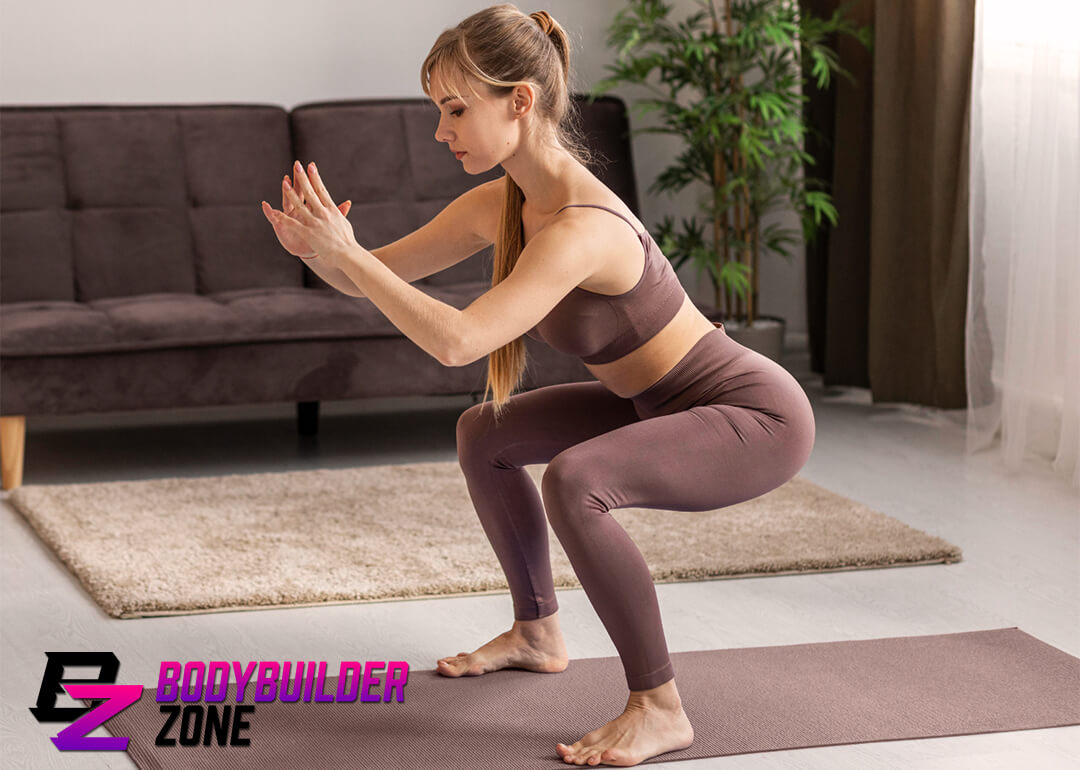
You may significantly increase the efficacy of your training and lower your risk of injury by giving form and technique top priority during your leg workout. One will be in a lot better position to advance to more difficult workouts to safely attain goals if they are stronger and more self-assured.
Building a Beginner’s Workout Plan
It’s crucial to follow a beginner’s exercise plan since it provides a solid basis for fitness and ensures long-term success. A well-designed strategy will assist a person in maintaining organization, motivation, and focus on their fitness objectives.
Initially, it is crucial to begin with a well-rounded regimen that includes aerobic activity, weight training, and flexibility exercises. Here’s a simple weekly workout plan that incorporates the above components:
| Day | Workout type | Activities | Duration |
| Monday | Strength training | Bodyweight squats, push-ups, lunges | 30–45 minutes |
| Tuesday | Cardiovascular | Brisk walking or cycling | 30 minutes |
| Wednesday | Rest or active recovery | Light stretching or yoga | 20–30 minutes |
| Thursday | Strength training | Dumbbell rows, planks, glute bridges | 30–45 minutes |
| Friday | Cardiovascular | Jogging or swimming | 30 minutes |
| Saturday | Flexibility & mobility | Full-body stretching routine or yoga | 30 minutes |
| Sunday | Rest | – | – |
Frequency, length, activity kinds, and progression must all be carefully considered when creating a beginner’s workout plan. You may build a solid foundation for your fitness journey by adhering to an organized program that combines aerobic activities, weight training, and flexibility work. In addition to improving your physical fitness, this well-rounded regimen will encourage an active and healthy lifestyle. Feel free to modify your strategy as you go along to accommodate your changing preferences and fitness objectives.
Conclusion and Next Steps
For any novice, this may be both extremely thrilling and intimidating. The foundation for strength and conditioning is a well-planned program that incorporates leg exercises and good form.
By focusing on introductory exercises that use the technique key, progression, and so forth, you can modify your training sessions to fit the requirements and objectives of each client. One of the following steps can help you advance your personal training journey:
- Establish specific goals. To keep yourself motivated and monitor your progress, set both short- and long-term fitness objectives. Increased repetitions, greater weights lifted, and cardiovascular set outcomes are all part of it.
- Try additional workouts. After you have mastered the fundamental motions, continue pushing yourself by including additional workouts or adjustments that give your practice more variation.
- Seek guidance and join a fitness group. As you start your practice, try to get professional help and direction by enrolling in group programs or hiring a personal trainer. Being a member of a fitness group, whether in person or virtually, may inspire accountability, support, and access to extra resources that will be helpful all along the way.
Follow these suggestions and take the initiative to make sure you have taken the right path to better health and fitness. Since every journey starts with a single step, your efforts will eventually lead to your fitness objectives and all the advantages that come with leading an active and robust lifestyle.










Leave a comment