



10 Best Back Exercises
The foundation of the body’s efficient, well-rounded structure is the large, broad back. In addition to providing proper posture, having back muscles is essential for both prevention and overall sports performance. Exercise that targets the lats, traps, rhomboids, and spinal erectors is part of a well-rounded program.
Mixing up your back workouts will guarantee that you train the muscles from various perspectives, ensuring that you get symmetry and strength. Three of the greatest back workouts have been selected. For lifters of all skill levels, the exercises will emphasize strength, posture, and size increase. These exercises are essential to every practice, regardless of skill level.
Deadlift
One of the finest exercises for building general strength is the deadlift, which is especially beneficial for the back. In order to build power and strength in terms of stability, it requires the firing of numerous primary muscles.
- Primary muscles worked
It is a full-body exercise that primarily targets the lower back, traps, and lats while also targeting the muscles that support it, including the glutes, hamstrings, and core.
- Additional advantages
Good posture, core stability, and grip strength will all be improved by the deadlifts. Through the development of toughness and sheer power, they improve athletic performance.
There are several guidelines to adhere to regarding proper form:
- Starting with the feet shoulder-width apart and the barbell over the midfoot is the first step in proper form.
- During the exercise, maintain a straight back, raise your chest, and use your core.
- Avoid jerking the weight and press through your heels as you raise the bar in a steady, fluid manner.
This powerful workout enhances general functional fitness in addition to strengthening the back. Anyone who wants to build stability and strength across their entire body must do it.
Bent-Over Row
A regulated exercise that strengthens the middle back and improves muscular balance is the sitting row.
- Main muscles targeted
The sitting row works the lats, traps, and rhomboids. Additionally, it employs the posterior delts and biceps as supplementary movers.
- Additional advantages
By increasing the thickness of your back, this exercise will help you pull more powerfully overall and improve your posture. Additionally, it will help isolate the rear for additional texture detail.
There are main tips for maintaining proper exercise form:
- With your feet on the footplates, your shoulders back, and your chest out, sit upright.
- Focus on the shoulder blade peak squeeze at the very top as you effortlessly pull the handle down towards your body.
- Avoid leaning too far or pressing with your arms fully extended.
For general upper-body stability, muscular balance, and mid-back strength, this exercise is perfect. Both novice and expert lifters will find it ideal.
Seated Row
The seated row is a great way to strengthen your middle back and improve your overall pulling power. Here, the key elements are muscular engagement, form, and a controlled lift.

- Primary muscles worked
Lats, traps, and rhomboids. For assistance, add the biceps and posterior delts as well.
- Additional advantages
Balances out the upper body’s musculature from all the pushing, strengthens the upper body and improves posture. Pull the handle toward your body, pinch your shoulder blades together, and sit up straight with your shoulders back and chest out.
Let’s check the advice on the appropriate form:
- With your shoulders back and your chest out, sit up straight.
- Pinching your shoulder blades together, pull the handle in the direction of your body.
- Do not allow the weight to pull you forward or cause you to lean back.
They are a mainstay for back development since they offer a targeted method of increasing mid-back strength and are appropriate for all fitness levels.
Pull-Up
When it comes to building stronger lats and upper back muscles, the pull-up is the best bodyweight exercise. They are actually a necessary activity for every back workout and one of the finest methods to define upper-body strength.
- Main muscles targeted
The biceps, rhomboids, traps, and lats. Pull-ups also help you maintain stability by using your shoulders and core.
- Additional advantages
enhanced functional fitness, strength, and grip in the upper body. These exercises also increase the pulling strength of other workouts.
Here are a few pieces of advice for your good form:
- Hold the bar palms away from you and slightly wider than shoulder-width.
- Squeeze your lats firmly at the top after pulling up until your chin is above the bar.
- Without swinging or utilizing momentum, lower yourself.
Why include pull-ups? They’re a great workout that builds back strength and breadth, which is crucial for a V-shaped body.
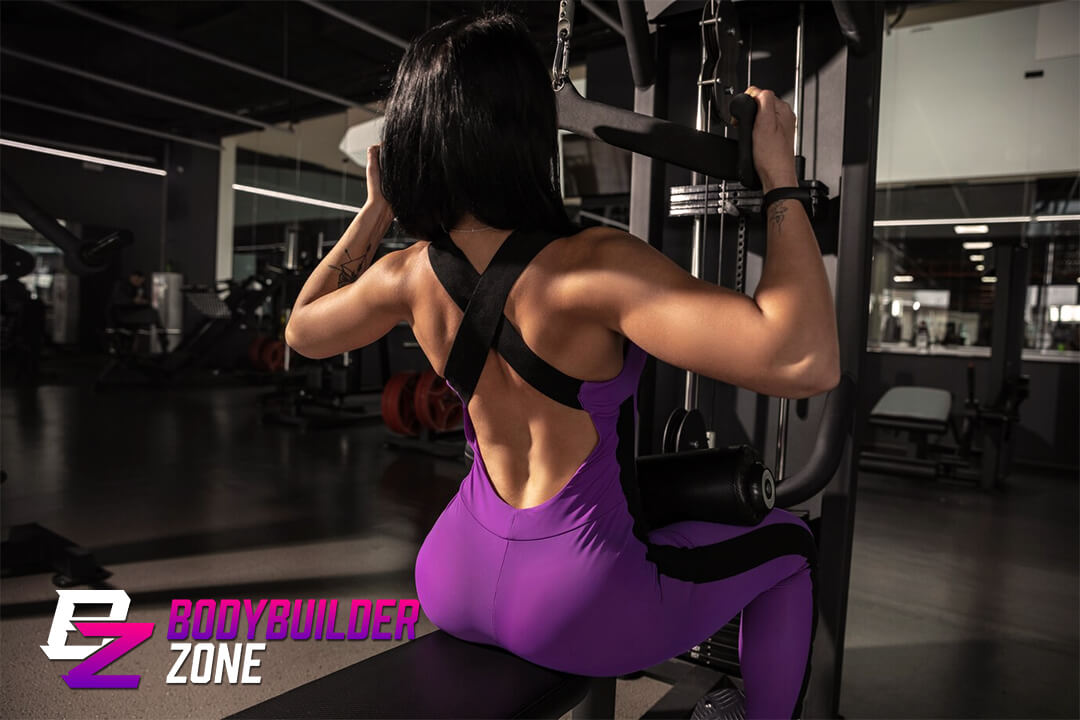
Lat Pull-Down
For both novice and expert lifters, the lat pulldown is an excellent workout for strengthening your lats and promoting back breadth. It’s essentially a mimic pull-up with a great deal of control over the weight used.
- Primary muscles worked
Lats, traps, and rhomboids, as well as the usage of the shoulders and biceps as accessories.
- Additional advantages
Excellent for strengthening the pulling muscles used in different types of pull-ups, expanding the breadth of the back, and enhancing posture.
There are several guidelines to adhere to regarding proper form:
- Hold the bar slightly wider than shoulder-width while sitting with your thighs beneath the pad.
- With your shoulders down and your chest high, lower the bar to your upper chest.
- During execution, refrain from using momentum or bending back too much.
They are regulated, adjustable choices for the lats, which are fantastic for developing pull-up technique and strength.
Single-Arm Dumbbell Row
The single-arm dumbbell row is a unilateral exercise that balances the entire back muscular structure by focusing on the lats. This exercise’s great range of motion makes it incredibly beneficial for building back muscles.
- Main muscles targeted
The rhomboids, traps, and lats were the main muscles used. Additionally, it strengthens the core and biceps for stability.
- Additional advantages
In terms of improving neuromuscular control, range of motion, and muscle symmetry, this exercise offers various benefits.
There are main tips for maintaining proper exercise form:
- Maintaining a straight back, place one knee and one hand on the bench.
- Squeeze your shoulder blade at the top of the dumbbell as you pull it to your hip.
- Without allowing your shoulder to drop, carefully lower the weight.

Why incorporate dumbbell rows with a single arm? To ensure balanced strength and size growth, they are perfect for isolating each side of the back.
T-Bar Row
The middle and upper back are heavily weighted for strength and thickness during the complex action known as the T-bar row. It is an excellent workout for anyone who wants to build strong, toned back muscles.
- Primary muscles worked
The main muscles used were the posterior delts, rhomboids, traps, and lats. The biceps and lower back serve as stabilizers.
- Additional advantages
Builds overall pulling power and back thickness while improving grip strength.
Let’s check the advice on the appropriate form for you:
- If using a machine, keep your chest on the pad. If you use dumbbells, bend at the hips while maintaining a neutral spine.
- Focus on squeezing the shoulder blades together as you pull the handle towards your lower chest.
- Avoid rounding your back throughout the exercise and don’t jolt the weight.
They are great for simultaneously strengthening many muscle groups and thickening the back.
Single-Arm Smith Machine Row
This exercise is special because it gives the lats a strange combination of isolation and stability. Because of the Smith machine, you have control over the movement and can carry loads.
- Main muscles targeted
Rhomboids and lats, with activation of the back delts and secondary traps.
- Additional advantages
enables exercising back muscles from a different perspective while utilizing heavy weights with a regulated technique.
There are main tips for maintaining proper exercise form:
- Typical errors include bending your knees slightly and standing to the side of the bar while gripping it in one hand.
- Keep your back flat and your core firm as you pull the bar in toward your hip.
- Slowly lower it so that the muscle retains its tension.
There are a lot of reasons for including Smith machine rows with a single arm. In addition to providing much-needed stability for concentrating on technique and muscle activation, this exercise may be a great way to target the lats.
Dumbbell Pull-Over
Along with strengthening the chest and core muscles, the dumbbell pullover is another multiplanar exercise for the lat. Any back workout that aims to increase upper body strength and flexibility should include this technique.

- Primary muscles worked
Important muscles engaged the core and triceps while activating the chest and lats.
- Additional advantages
encourages improved shoulder mobility, improves posture, and contributes to a wider chest.
Here are a few pieces of advice for your good form:
- Position yourself on the bench such that your feet are on the floor and your upper back is properly supported.
- Keep your arms slightly bent and steadily lift the dumbbell backwards over your head while holding it over your chest with both hands.
- Maintain tension in your lats and return the dumbbell to its starting position.
Additionally, the exercise adds diversity to your program, particularly when it comes to targeting the lats for more functional and well-defined backs.
Chest-Supported Row
Because it doesn’t put as much strain on the lower back, the chest-supported row is an excellent isolation exercise. It’s ideal for lifters who want to focus their back muscles and reduce the strain on their back.
- Main muscles targeted
Secondary movers include rhomboids, traps, lats, and biceps and rear delts.
- Additional advantages
In addition to strengthening the back and enhancing posture, it lessens the strain on the lower back.
Let’s check the advice on the appropriate form for you:
- Lie face down with your chest supported and the bench slightly angled.
- Squeeze your shoulder blades at the top of the dumbbells or barbells as you draw the weight to your lower chest.
- To prevent bouncing and the release of muscle tension, lower gradually.
These exercises are appropriate for lifters of all skill levels since they are excellent at targeting the upper back while putting less strain on the lower back.
Best Back Workouts
A well-designed workout that works all the major muscles of the lats, traps, rhomboids, and spinal erectors is the key to building a strong, muscular back. In addition to improving appearance, a solid back workout will improve posture, core stability, and general strength. Three very successful back exercises that are suited to various training goals are listed below.

Hard and Heavy Back Workout
By using heavy weights and few repetitions, this workout aims to increase raw strength and size. Ideal for lifters who want to increase the thickness and power of their backs.
| Exercise | Sets | Reps | Rest |
| Deadlift | 4 | 4 | 3–5 minutes |
| Barbell row | 4 | 6 | 2–3 minutes |
| Weighted pull-up | 4 | 6 | 2 minutes |
| T-bar row | 4 | 8 | 90 seconds |
This plan is ideal for developing strength and a thick, strong back since it is more load-heavy and compound-heavy. This paves the way for a large, powerful back with challenging, heavy exercises if your goal is strength and bulk.
Row-to-Grow Back Workout
This routine, which concentrates on rows with moderate weights and greater reps for maximum hypertrophy, is designed to enhance back growth.
| Exercise | Sets | Reps | Rest |
| Bent-over barbell row | 4 | 10 | 90 seconds |
| Single-arm dumbbell row | 3 | 12 | 60 seconds |
| Chest-supported row | 3 | 12 | 60 seconds |
| Cable face pull | 3 | 15 | 45 seconds |
For lifters who want to increase their pulling strength and grow a wider, more defined back, this program will be ideal. This program is ideal for hypertrophy because of the high-rep rows and a few auxiliary movements. These make it simple to build a symmetrical, strong back.
Machine Pump Back Workout
This exercise uses equipment to give the back muscles a regulated, safe pump. Beginners or those seeking a somewhat less strenuous yet equally effective practice will benefit greatly from it.
| Exercise | Sets | Reps | Rest |
| Lat pull-down | 4 | 12 | 60 seconds |
| Seated row | 4 | 12 | 60 seconds |
| Machine pull-over | 3 | 15 | 45 seconds |
| Rear delt fly (machine) | 3 | 15 | 45 seconds |
This exercise is perfect for people who are new to back training. It’s an excellent choice for novices or people recovering from injuries since it allows for the safe development of back muscles through regulated motions.










Leave a comment