


- Why Training Your Glutes Is Important
- Benefits of Strong Glutes: Strength, Posture, and Injury Prevention
- Common Myths About Glute Workouts
- Understanding Your Glute Muscles
- Gluteus Maximus, Medius, and Minimus: Their Roles and Functions
- Why Activation Matters for Effective Workouts
- The Best Glute Exercises for Growth and Strength
- Bodyweight Glute Exercises (Perfect for Beginners):
- Weighted Glute Exercises (Intermediate to Advanced):
- Glute Isolation Movements:
- Sample Glute Workout Routine for All Levels
- Beginner (2–3 Days Per Week):
- Intermediate (3–4 Days Per Week):
- Advanced (4–5 Days Per Week):
- Tips for Maximizing Glute Activation
- How to Focus on Mind-Muscle Connection
- Proper Form: Avoiding Common Mistakes
- Progressive Overload: Adding Weight and Reps Safely
- Common Mistakes That Hold Back Glute Development
- Relying Too Much on Quads or Lower Back
- Not Using Full Range of Motion
- Neglecting Recovery and Nutrition
- Nutrition to Support Glute Growth
- Protein for Muscle Building and Recovery
- Carbohydrates to Fuel Intense Glute Workouts
- Healthy Fats for Hormonal Balance
- Stretching and Recovery for Your Glutes
- Best Glute Stretches After a Workout
- Foam Rolling Techniques for Glute Relief
Why Training Your Glutes Is Important
Strong glutes are essential for general strength, posture, and injury prevention; they are not simply for show. Including glute workouts in your regimen will help you perform better in sports and move more easily in daily life.
Benefits of Strong Glutes: Strength, Posture, and Injury Prevention
Your body benefits greatly from having a strong gluteal muscle group. In addition to giving you a hard, toned look, strong glutes support your entire body while you move and exercise.
- Enhanced power
Exercises that strengthen the glutes include jogging, deadlifting, and squats.
- Improved alignment
To maintain proper posture, the glutes support the lower back and pelvis.
- Decreased injury risk
Injuries primarily to the lower body are less likely when well-trained glutes support the hips and knees.
- Improved sports performance
Sports performance improvement is guaranteed since stronger glutes translate into more explosive actions.
- Enhanced mobility and balance
Better balance and mobility in daily activities are supported by strong glutes.
You get stronger overall when you work on your glutes. It promotes proper posture and guards against accidents. It is an essential component of any fitness program for all of these reasons.
Common Myths About Glute Workouts
A number of misunderstandings hinder glute exercise. You will get the most out of your glute workout if you are aware of the facts.
- More is better
Doing glute exercises doesn’t have to take forever. Along with appropriate form, quality and not quantity – this is what counts.
- Exercises for isolation are essential
Compound exercises like squats and deadlifts work the glutes a bit better than isolation workouts, even if isolation exercises are still beneficial.
- Glutes are only important for appearance
Of course, attractive buttocks are important, but so are performance and injury prevention.
- You can spot-train fat
The fat surrounding your glutes won’t be burned by glute movements alone.
- No gain, no pain
When it’s common to feel uncomfortable when working out, pain frequently indicates an injury.
Now that these beliefs have been dispelled, you may approach glute training with the proper attitude to get the most out of your exercises.
Understanding Your Glute Muscles
You can target your glutes more effectively at the gym and achieve greater results if you are aware of the various muscles involved and their functions.

Gluteus Maximus, Medius, and Minimus: Their Roles and Functions
Each of these muscles has a distinct function in your body’s bracing and movement.
- Maximus gluteus
The biggest and most well-known of the three facilitates lower body exercises like lunges, deadlifts, and squats by extending the hips and rotating them outward.
- Medius gluteus
It is crucial for balance and stabilizes the pelvis when walking and jogging on the side of the hip.
- Minimus gluteus
The smallest of these three, it supports the gluteus medius in stabilizing the hip joint by aiding in internal rotation and hip abduction.
Being aware of each of these muscles will enable you to target them more successfully during your workouts, increasing your total strength and mobility efficiency.
Why Activation Matters for Effective Workouts
To make sure your glutes are functioning correctly throughout activities, activate them before you work out. Other muscles may compensate for them if you don’t use them, which might make exercises less effective.
This positions you for more muscle activation, improved gluteal form, and more rapid overall improvement.
The Best Glute Exercises for Growth and Strength
It takes a combination of focused workouts that efficiently work all areas of the gluteal muscles. Adding some diversity to your glute training regimen can help maximize progress.
Bodyweight Glute Exercises (Perfect for Beginners):
Bodyweight exercises might be a terrific starting point for developing glute strength if you’re a total beginner. They are ideal for beginners because they are portable and effectively work the glutes.
- Glute Bridges
A simple and effective exercise for strengthening the gluteus maximus is the glute bridge.
- With your feet flat on the floor, bend your knees while lying on your back.
- Squeeze your glutes at the peak after pushing through your heels to raise your hips to the ceiling.
- Repeat with your lower back.
This workout will increase hip mobility while strengthening and activating your glutes.
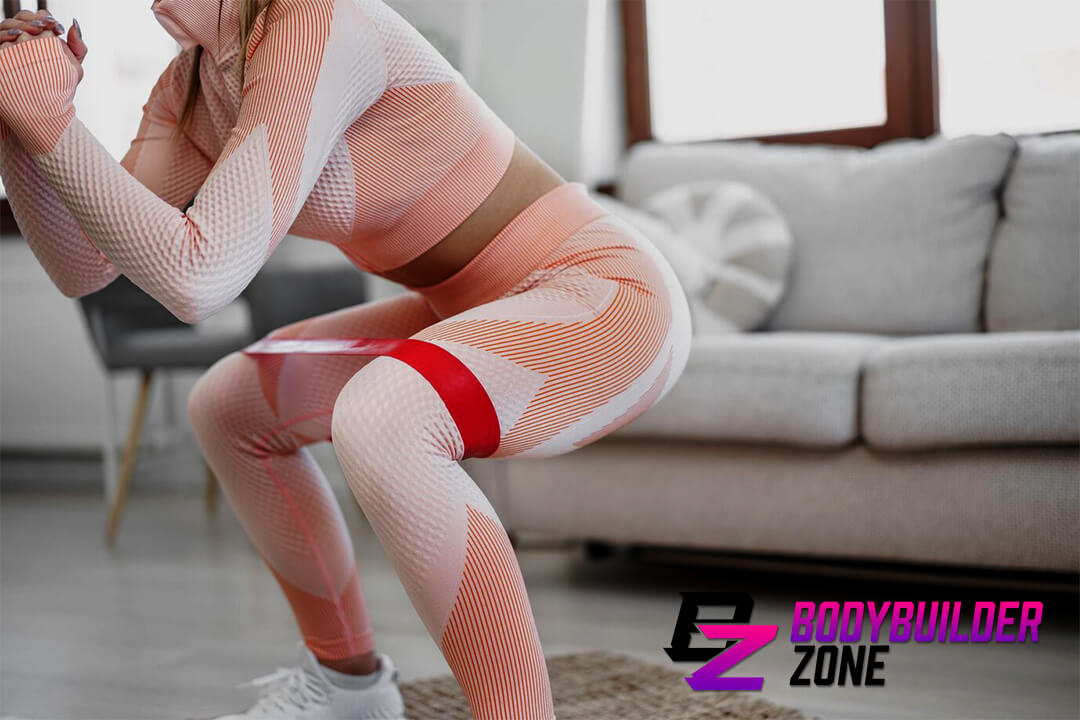
- Bodyweight Squats
Some of the most noticeable muscles in the lower body, such as the hamstrings, quadriceps, and glutes, are worked during squats
- Keep a shoulder-width distance between your feet.
- Lower your hips while maintaining your knees behind your toes.
- Stand up again and push through your heels.
Bodyweight squats are an excellent way to build a stronger lower body.
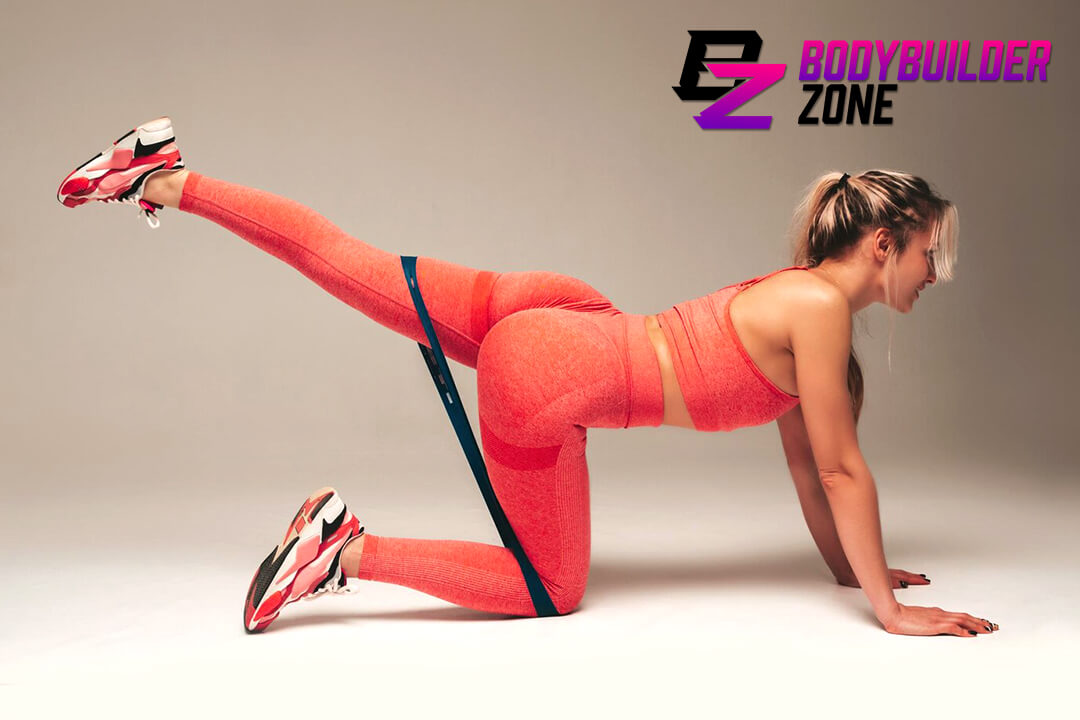
- Donkey Kicks
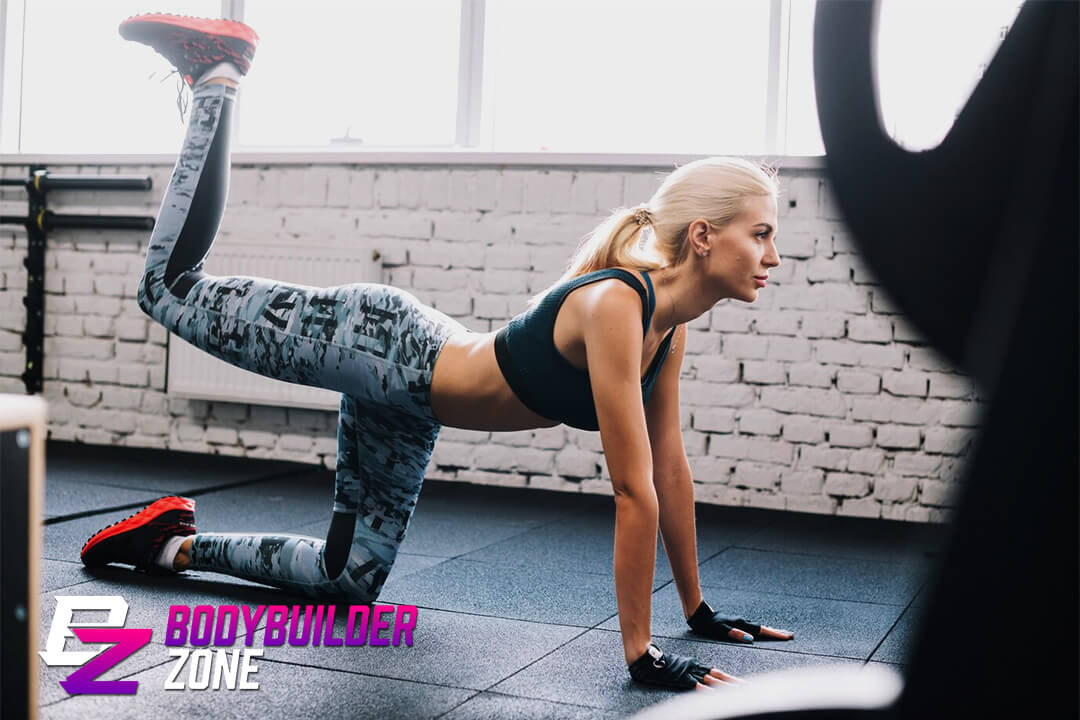
Donkey kicks are a fantastic workout that effectively isolates the glutes. Here are some examples.
- Make sure your knees are behind your hips and your hands are beneath your shoulders.
- Squeeze your glutes at the peak after flicking one leg behind you while maintaining a bent knee.
- Repeat on the opposite side after lowering down.
Hip extension is improved and the gluteus maximus is targeted by the kicking movements.
Weighted Glute Exercises (Intermediate to Advanced):
Your glutes will be more engaged by weighted workouts, which will help you gain size and strength. The optimal levels for these workouts are intermediate and advanced.
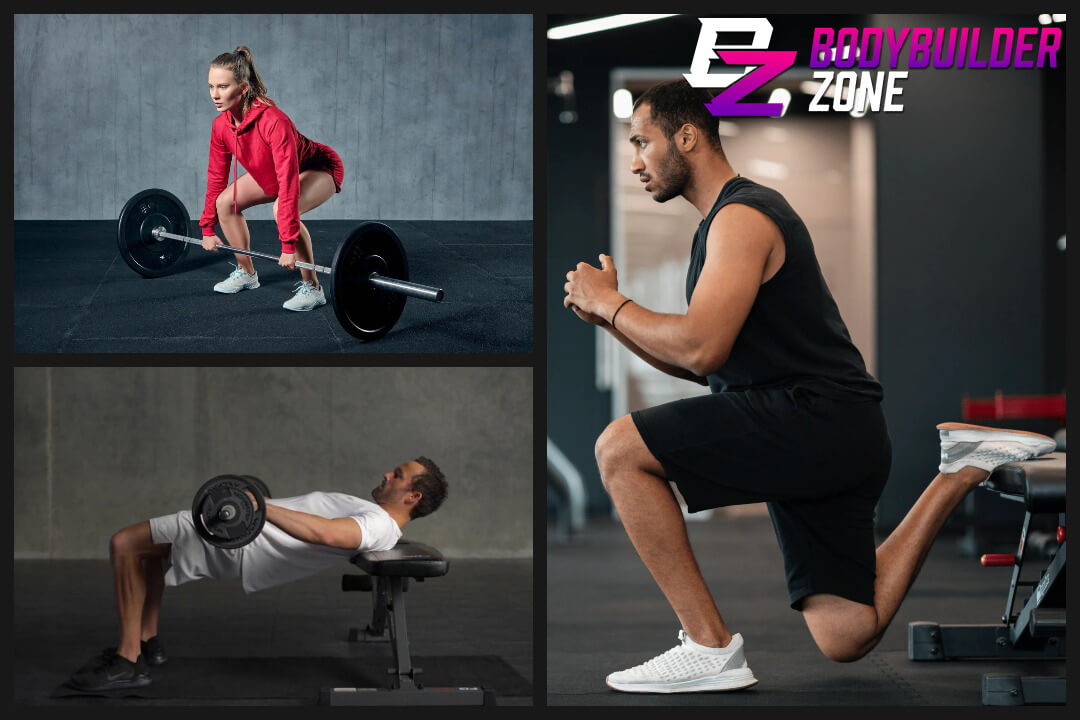
- Barbell Hip Thrusts
One of the best ways to work and build your glutes is to perform hip thrusts with a barbell.
- Place a barbell over your hips and sit on the floor with your upper back against a bench.
- While glute-bridging, fling your hips upward while lying on your back.
- Lower yourself back down to resume.
It offers isolation for a higher level of total muscle activation.
- Bulgarian Split Squats
The Bulgarian split squat is a unilateral exercise that works the hamstrings, quadriceps, and glutes.
- Keep your back in a straight position.
- Descend your hips in a lunge stance while placing one foot on a bench behind you.
- Put pressure through your front heel to go back.
A dumbbell or barbell placed on the front leg will create strain.
- Romanian Deadlifts
Romanian deadlifts are thought of as complex exercises that work the glutes and hamstrings.
- Place a barbell or dumbbells in front of your thighs while standing with your feet hip-width apart.
- Keep a straight back by hingeing from the hips with a tiny bend in the knee.
- Squeeze your glutes to go back to standing after lowering the weight to the floor.
This exercise is excellent for strengthening the gluteus and the posterior chain.
Glute Isolation Movements:
Glute isolation exercises are designed to make the gluteal muscles the main focus of your training to increase muscular growth. After compounds are excellent for nailing your glutes.
- Cable Kickbacks
One of the finest glute workouts that truly isolates the gluteus maximus is the cable kickback.
- Attach an ankle strap to one ankle after hooking it to the low pulley machine.
- Squeeze your glutes at the top, kick your leg back, keeping a straight knee, and stand facing the machine.
- Repeat after gently moving back to the beginning position.
This helps to shape and build the glutes by applying constant strain to them.
- Single-Leg Hip Thrusts
The single-leg hip thrust involves concentrating just on one leg, which increases glute activation and presents a greater challenge to balance.
- With one leg out in front of you and one foot flat, take a seat on a bench on the floor with your back to it.
- Drive through the planted heel, lift your hips and give your glutes a firm squeeze at the top.
- Go back down and do it again.
This exercise strengthens the glutes and increases stability, particularly in each leg separately.
Glute isolation exercises are excellent for focusing just on the glutes to add definition and detail. Try to include these exercises into your glute training program.
Sample Glute Workout Routine for All Levels
A basic example workout for beginners that focuses on gradually increasing gluteal strength and muscle is shown below.
Beginner (2–3 Days Per Week):
A novice may build a solid foundation of strength and muscle control with these bodyweight exercises.
- Bodyweight Glute Bridges – 3×12
With the soles of your feet on the floor and your knees bent, lie on your back. Squeeze at the peak after pressing through your glutes and heels to raise your hips.
- Squats – 3×15
With your feet shoulder-width apart, press your hips back and bend your knees to drop yourself into a hip-hinged position. The heels should be pushed through to return to standing.
- Donkey Kicks – 3×12 (each side)
Maintaining a 90-degree angle at the knee, raise one leg back behind you while on all fours. Repeat on the opposite side after lowering yourself back down and squeezing your glutes at the top.
For novices, this glute workout is quite effective. Form and consistency are essential for observing progress.
Intermediate (3–4 Days Per Week):
More effective compound and isolation movements are used in this training regimen.
- Barbell Hip Thrusts – 4×10
Place a barbell over your hips and sit on the floor with your back against the bench. Raise your hips by pushing through your heels, then squeeze your glutes firmly at the top.
- Romanian Deadlifts – 3×12
With your knees slightly bent, hold a barbell or dumbbells in front of your thighs. Lower the weight without arching your back by hingeing from your hips.
- Bulgarian Split Squats – 3×10 (per leg)
Step one leg forward and place the other foot on a bench behind you. Maintaining your knee in line and avoiding tracking over your toes, lower your body into a lunge.
Your glutes will get even more from this workout if you are consistent and use progressive overload.
Advanced (4–5 Days Per Week):
Compound lifts and high-rep isolation workouts will be the mainstays of this regimen to guarantee optimal glute activation and growth.
- Weighted Hip Thrusts – 5×8
Position the barbell above your hips while lying on your back on the bench. Squeeze your glutes at the peak after extending your hips. Then squeeze firmly at the top and maintain control throughout the whole range of motion.
- Deadlifts – 4×8
Place your feet shoulder-width apart and hold the barbell with your hands just above your knees. Lower the barbell toward the floor by bending the hips while maintaining a flat back.
- Cable Kickbacks – 3×15
Put an ankle strap on one ankle and fasten it to the low pulley machine. With your back to the machine, thrust your leg back straight while clenching your glutes firmly at the top.
The advanced exercise program below combines high-rep isolation exercises with heavy compound lifts to optimize glute activation.
Tips for Maximizing Glute Activation
Any workout must maximize glute activation, which is the foundation for all strength and development. The following advice will help you get the most out of your glute exercises.
How to Focus on Mind-Muscle Connection
Being psychologically connected to the muscle you are training is known as the mind-muscle connection. To strengthen the link between the mind and muscles, do this:
- At every step, pay attention to your glutes. Imagine the muscle contracting and growing longer.
- Reduce the repetitions and concentrate on experiencing the muscle’s full range of motion.
- To improve involvement, pause at the top of each repetition and clench your glutes.
This can significantly increase the degree of muscle activation and, thus, the outcomes.
Proper Form: Avoiding Common Mistakes
The following are typical mistakes that you should stay away from:
- Notably overarching your back during deadlifts or hip thrusts. This can increase the pressure on your lower back and decrease the involvement of your glutes.
- Using momentum rather than activation, particularly while performing squats and deadlifts. This reduces the exercise’s efficacy and increases the risk of injury.
- Exercises like glute bridges and hip thrusts do not fully expand the hips. To properly engage your glutes, press your hips all the way through.
To optimize glute activation and avoid injury, proper form is crucial.
Progressive Overload: Adding Weight and Reps Safely
The resistance training concept of progressive overload is essential for steady improvement. Here’s how to safely include progressive overload into your glute exercises:
| Progression method | How to apply |
| Increase weight | Add small increments of weight to exercises like hip thrusts or deadlifts. Focus on maintaining proper form as the load increases. |
| Increase reps | Increase the number of reps per set, especially for exercises like squats and glute bridges. |
| Increase sets | Add an extra set to your glute exercises to increase overall volume, challenging your muscles further. |
More substantial increases in strength and size can be achieved by safely and methodically pushing your muscles.
Common Mistakes That Hold Back Glute Development
The majority of people unintentionally make mistakes that hinder their development. To make the most of your efforts, it is crucial to avoid mistales.
Relying Too Much on Quads or Lower Back
When the quadriceps or lower back begin to overwhelm glute workouts, it becomes a typical mistake. Refocus your attention to the correct form and engage your glutes during each exercise.
Not Using Full Range of Motion
Half-reps and not working through the entire range of motion are two other mistakes. To get the most out of each exercise, take your time and move your glutes through their full range of motion.
Neglecting Recovery and Nutrition
During your recovery, growth occurs outside of the gym. To help your glutes recuperate and become larger, eat a well-balanced diet and get adequate sleep.
Nutrition to Support Glute Growth
Nutrition is essential for building powerful glutes. Here’s how your glutes develop in relation to protein, carbs, and healthy fats.
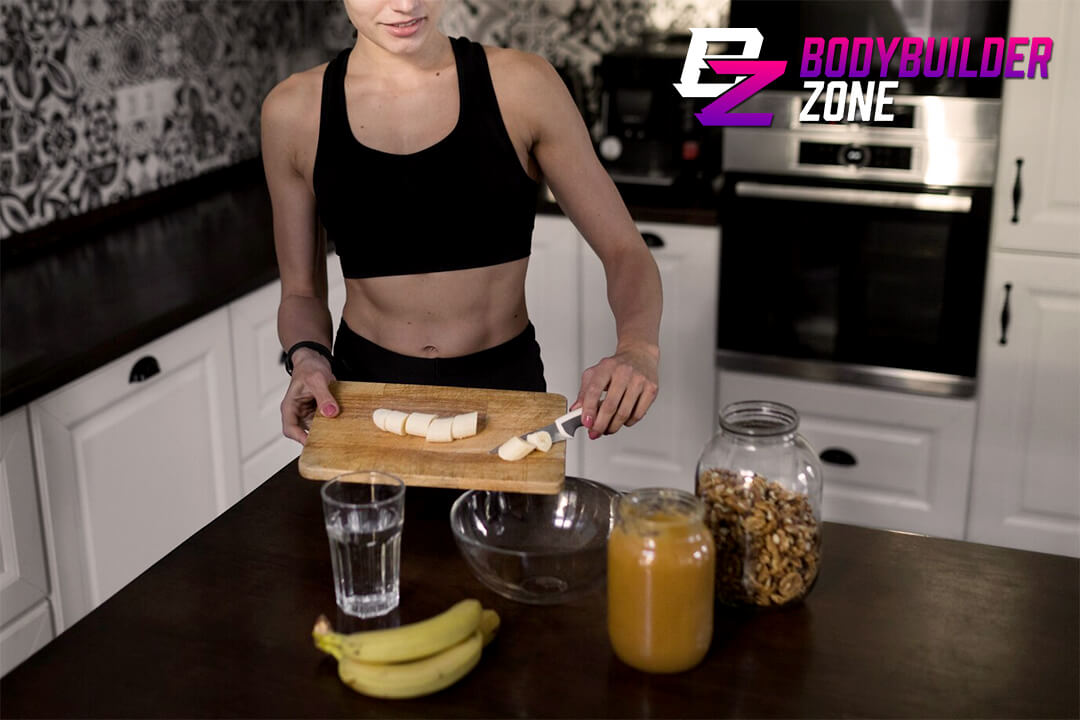
Protein for Muscle Building and Recovery
The food required to rebuild or repair the muscle fibers you damage during glute-focused activities is protein.
Try to get high-quality protein from fish, poultry, eggs, and plant-based foods like lentils or tofu. Eat protein as soon as possible after working out to hasten muscle growth and recuperation.
Carbohydrates to Fuel Intense Glute Workouts
Basically, the best way to feed your body for strength, especially while doing glute workouts, is with carbohydrates. You may consume foods like rice, quinoa, and sweet potatoes that contain complex carbs.
Nutrition before and after exercise helps restore muscle glycogen stores and provides energy for performance through carbohydrate.
Healthy Fats for Hormonal Balance
Healthy fats are crucial because they promote hormonal balance, which is directly related to muscle growth and repair.
Add products like avocados, almonds, seeds, and olive oil to your diet. Consume fat in moderation to keep your body in the optimal condition for training and recuperation.
Stretching and Recovery for Your Glutes
For strong, healthy glutes, stretching and rehabilitation should be just as important as exercise.
Best Glute Stretches After a Workout
After an exercise, stretching helps to improve flexibility by releasing tension in the glutes.
- Seated figure-four stretch
Lean forward while lying on the floor with one ankle crossed over the other knee.
- Pigeon pose
To stretch your glutes, begin on your knees and extend one leg behind you while drawing the other leg forward.
- Lying glute stretch
Pull your legs toward your chest while lying on your back and crossing one ankle over the other knee.
To increase relaxation, hold each stretch for 20 to 30 seconds while concentrating on deep breathing.
Foam Rolling Techniques for Glute Relief
It is an excellent method to increase blood flow and relieve gluteal stiffness.
- Single-leg roll
Roll over your glutes slowly while placing your body on the foam roller with one leg crossed over the other.
- Full glute roll
Roll throughout the whole glute area while sitting with both feet on the floor using deliberate motions.
- Trigger point release
To aid in the release of muscular knots, pause for a few seconds on areas that feel tight.
Give each glute one to two minutes, moving slowly so as not to cause excruciating agony.
Stretches and foam rolling are essential components of your program for improving flexibility and glute recovery.











Leave a comment