



One of the numerous benefits of yoga is that it helps robust bodies balance their strength and flexibility. Although some people think that yoga is just about stretching, the majority of the poses work various muscles by using body weight resistance to increase strength.
Strength and flexibility improve posture, joint stability, and general health in addition to physical conditioning. Why flexibility and strength are important in yoga strength-building advantages:
- Strength-building benefits
Planks, warrior poses, and chair postures are examples of yoga positions that use the muscles to strengthen the arms, legs, and core. Over time, these poses help strengthen your muscles and increase your endurance by using your body weight.
- Increased flexibility
This exercise significantly increases flexibility in key regions including the shoulders, hips, and hamstrings. Asanas that involve forward bends and twists that gently stretch the muscles progressively increase the range of motion without causing harm.
- Better balance and coordination
In yoga, strength and flexibility work together to enhance balance, making it simpler to hold solid positions. This lowers the chance of falling and makes it easier to walk around in daily life.
Yoga is one of the best exercises for general physical wellness because of its special emphasis on strength and flexibility. Your body will eventually become stronger, more flexible, balanced, and ready for the majority of activities. Your concept of health and well-being may be completely changed by being able to concentrate on these factors, regardless of how experienced you are.
Key Poses for Strength
Certain yoga poses aid in increasing physical strength as well as stability and balance. Among them, the plank variants and warrior poses are some of the most effective ways to build stamina and endurance. The lower extremities of the body are strengthened by warrior poses, which work the legs, shoulders, and core. The upper body is strengthened by plank variants, which aid in core activation.

Warrior Poses
The most effective workouts for developing shoulder, core, and leg strength are found in the greatest warrior poses. Simple poses also aid in stabilization and concentration, maintaining a posture requires a high level of mental and physical fortitude. Some of the greatest basic postures that will eventually help create a solid foundation and improve endurance are listed below:
| Pose | Primary muscles engaged | Benefits |
| Warrior I | Thighs, glutes and core. | Strengthen the thighs, calves, and core while opening up the hips and chest. It greatly improves coordination and balance. |
| Warrior II | Thighs, shoulders and glutes. | Continues to strengthen the legs, shoulders, and glutes while increasing endurance. This improves hip flexibility and produces a pleasant stretch. |
| Warrior III | Core, back and standing leg. | Uses the majority of the body’s muscles, particularly the back and core, and balances the body’s weight on one leg. As a result, the body becomes more stable, strong, and coordinated. |
Since each of these basic poses must be maintained, which calls for both mental and physical endurance, they also aid in fostering steadiness and focus. As one advance in the practice, incremental strengthening is possible since each of these postures may be readily adjusted to accommodate different fitness levels.
Plank Variations
Well known for strengthening the core, plank positions may be altered to target other body parts. They effectively engage the arms, shoulders, and upper body to create a strong and stable core:
| Pose | Primary muscles engaged | Benefits |
| Standard plank | Core, shoulders and arms | For a full-body strength gain, try the classic plank variant, which works the arms, shoulders, and core. |
| Side plank | Obliques, shoulders and side body. | Strengthens the shoulders, legs, and obliques while also focusing on the side body, all of which contribute to core stability. |
| Forearm plank | Core, shoulders and upper back. | It targets the deeper core muscles, reduces wrist strain, and emphasizes shoulder and core activation. |
By adjusting the stance to suit your demands, you may gradually increase your strength. These variations within planks provide a well-rounded approach to core training. You may target both areas by incorporating warrior poses and plank variants into your yoga practice, which will help you improve your strength. One’s overall fitness will improve as a result of the practice’s regular muscular growth and stability improvements.
Poses for Flexibility
The key component of yoga that increases the range of motion relieves muscular tension, and provides appropriate joint support is flexibility. The 2 fundamental yoga poses, such as the forward bend and downward dog, are crucial for promoting flexibility. The main muscles in the shoulders, legs, and back that aid in body lengthening and stretching are the emphasis of both of these poses. With consistent practice, they also lead to improved mobility, less stiffness, and proper posture, all of which promote mental and physical health.
Downward Dog
One of the most potent yoga poses for increasing strength and flexibility is the downward dog. To begin, go down on your hands and knees. Next, raise your hips back and forth while maintaining an inverted “V” balance on your hands and heels. Your feet are hip-width apart, and your hands are shoulder-width apart. For a longer stretch, push your heels toward the floor.
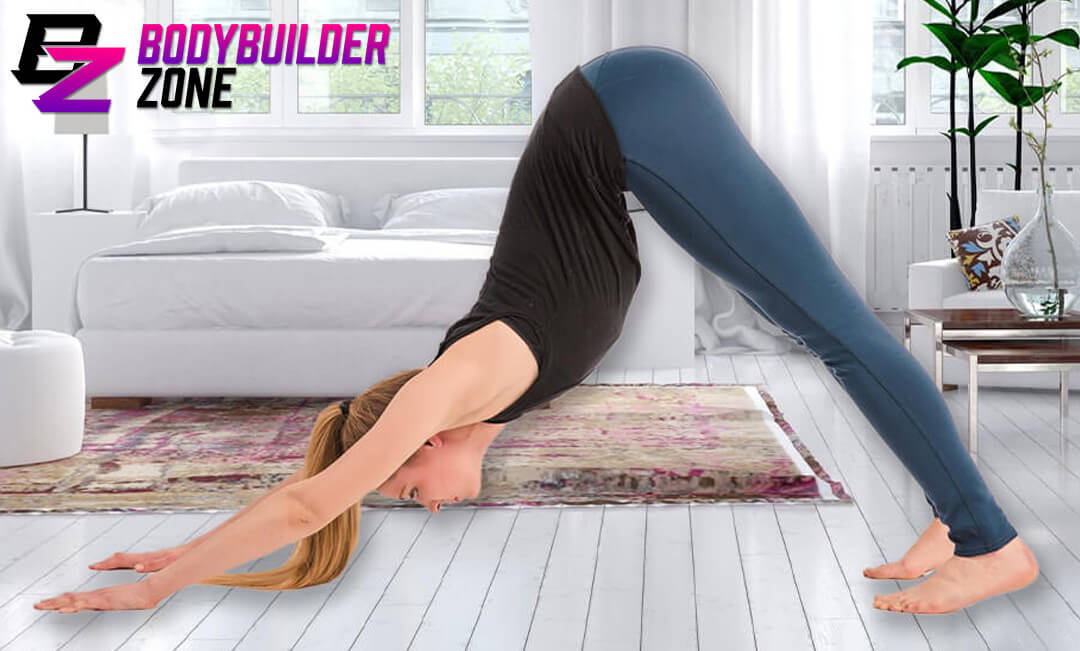
Benefits include strengthening the arms and shoulders, improving circulation and posture, and providing a strong stretch for the hamstrings, calves, and spine. Let’s see what else is essential about the downward dog pose:
| Pose | Target muscles | Benefits for flexibility | Additional notes |
| Downward dog | Hamstrings, calves, shoulders, spine. | Enhances leg and back flexibility, and supports spinal elongation. | Ideal for overall body stretching and spine lengthening. |
| Variations available | One-legged downward dog. | Increases hip flexibility, and deepens stretch in the hamstrings. | Can be modified by lifting one leg to engage hip muscles more deeply. |
| Modifications | Bent knees or elbows. | Suitable for beginners with tight hamstrings or shoulder stiffness. | Can use props (e.g., blocks) to assist in finding correct alignment. |
In addition to strengthening the arms and core, this yoga pose will stretch the hamstrings, calves, and shoulders. Its adaptability and all-encompassing stretching effects on the body make it a fundamental pose in many yoga programs.
Forward Bend
The standing forward bend, or uttanasana is a powerful hamstring stretch that also relieves lower back strain. Place your feet hip-width apart, then gently bend forward from the hips so that your head and arms dangle down toward the floor. Bend your knees a little if your lower back feels tense.
This promotes relaxation and lowers tension while deeply stretching the hamstrings, calves, and lower back. It also gives the legs and spine flexibility. Additionally, it is a method of actively stretching the legs and spine, which is a more passive relief for tense muscles in the legs and lower back. It may be used to warm up or cool down the body at the start or finish of the routine:
| Pose | Target muscles | Benefits for flexibility | Additional notes |
| Forward bend | Hamstrings, lower back, calves | Improves flexibility in the back and legs, relieves muscle tension | Helps in reducing stress and encouraging relaxation. |
| Variations available | Seated forward bend | Focuses more on lower back and hamstrings | Suitable for a more relaxed stretch with less balance required. |
| Modifications | Slightly bent knees, arms on shins | Allows beginners to ease into the pose | Adjusting the knee bend can prevent lower back strain. |
Your yoga practice will benefit greatly from combining forward bend and downward dog to increase flexibility in a gradual, non-harmful way. Numerous advantages are offered by each position, which targets the calves, back, and hamstrings. Muscle suppleness, reduced tension, and expanded ranges of motion are all benefits of exercise that will enhance overall physical health.
Conclusion and Practice Tips
Strength and flexibility are essential components of the entire practice. Regularly practising the aforementioned essential poses, such as the forward bend and downward dog, will significantly improve general mobility and lower the chance of injury.
The continuation of such a process will allow for improved integration of the body and mind by facilitating both physical and mental improvements. Now, have a look at some suggestions for enhancing your practice:
- Establish a routine
Set up specific hours each week to practice. Like everything else, you will get better results if you are more consistent.
- Pay attention to your body
In each posture, pay attention to how your body feels. Alter the stance or simply take a break if something doesn’t seem quite right.
- Employ props
You can utilize blankets, straps, or blocks to assist you achieve your positions.
- Pay attention to your breathing
Including deep breathing in your practice will help you feel the deeper and more effective stretch in addition to promoting relaxation.
- Establish achievable goals
Set attainable goals for your strength and flexibility. As your practice duration and intensity improve, you will always be able to modify these objectives.
When combined with consistent practice, these suggestions will gradually increase a person’s strength and flexibility. By practising yoga, you can enhance your physical and mental well-being and enjoy this journey for the rest of your life.














Leave a comment