



Introduction to Abs Workouts for Beginners
Beginning an abs workout is an excellent method to strengthen the core, correct posture, and increase general fitness. Planks, crunches, and leg raises are three fundamental exercises that focus on various parts of the abs while beginning an ab workout. Some of the numerous benefits of working out the abs are listed below:
- Increases сore strength
Nearly every action in the body starts with the core. A strong core is the main component of the body that supports regulated, coordinated movement. A strong core stabilizes the pelvis and spine, lessening the strain on the nearby muscles and joints.
- Enhances posture
The foundation of both physical well-being and attractive appearance is proper posture, and ab workouts are crucial in this regard. To prevent slouching of the body, strengthening your abdominal muscles will undoubtedly help you maintain your shoulders back and your spine in alignment.
- Reduces back pain
Extremely common lower back discomfort is essentially caused by weak core muscles, which puts additional strain on the back to make up for the lack of much-needed support. In addition to lowering lower back stress, the exercise will strengthen your front and back of the core, adding balance to support the spine.
- Brings stability and balance
Mastering the condition of balance and stability, which is essential for both everyday living tasks and other more strenuous physical pursuits, requires core strength. It would turn out that having a strong core makes you more in control of your body, more accurate, and less likely to fall or be hurt.
- Better athletic performance
The core is essential for optimal performance in the majority of sports and workouts. A strong core undoubtedly allows one to execute quicker, more forceful motions with higher endurance when running, swimming, playing tennis, and playing soccer.
These benefits demonstrate how creating an abdominal exercise regimen may improve one’s level of fitness and well-being. To put it another way, a strong core prepares the body for improved movement, long-term health, and physical well-being.
Essential Abs Exercises
In addition to making you look better, stronger, tighter stomach muscles are essential for stability and general health. Effective core workouts may significantly improve posture, lower the risk of injury, and strengthen the torso. This section will examine the two fundamental exercises that are used to develop the abs: basic crunches and leg raises.

Basic Crunches
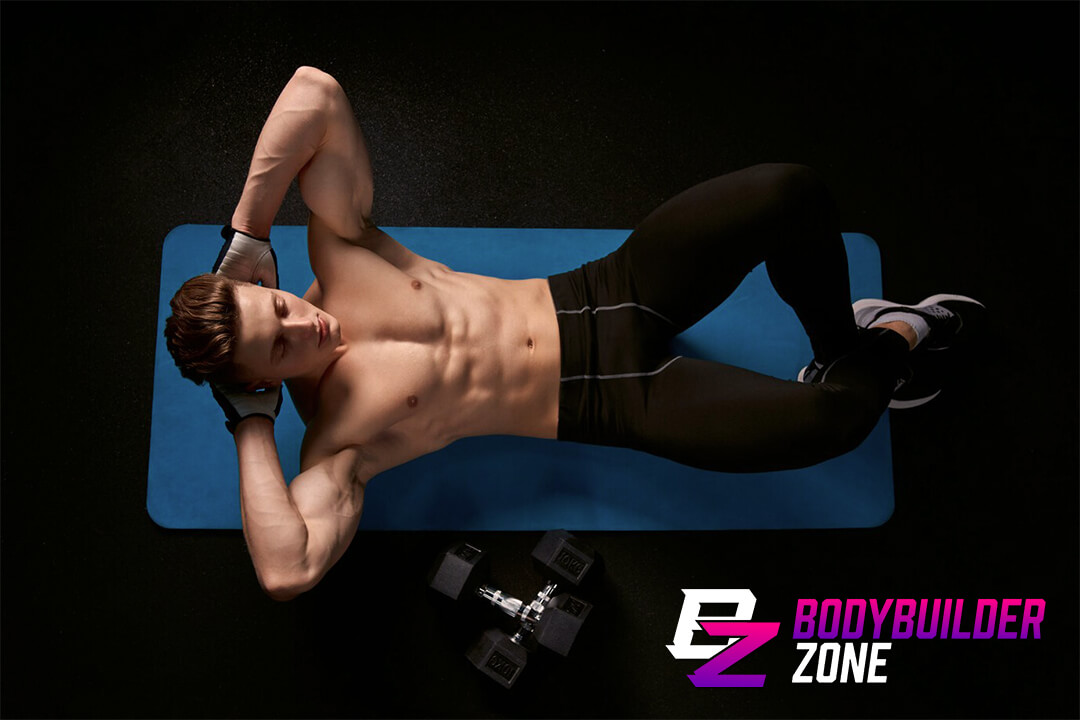
One of the easiest yet most effective workouts for strengthening the upper abs is undoubtedly the basic crunch. Crunches are primarily performed to strengthen and increase the endurance of the abdominal muscles. This is an instruction for beginners on how to do simple crunches:
- With your feet hip-width apart and your knees bent, lie on your back.
- Put your hands across your chest or behind your head.
- Curl your body toward your knees by using your core to raise your shoulders off the ground.
- After a few moments of holding at the peak, she steadily descends to the beginning position.
- Continue an exercise for as long as you can.
Compared to adding simple crunches to your training, your core will be stronger and you will be able to do your everyday tasks much more quickly. We want to provide you with an example of a workout with this exercise:
| Exercise | Sets | Repetitions |
| Basic crunches | 3–4 | 20–30 |
| Plank | 3 | 30-60 sec |
| Russian twists | 3–5 | 15–20 |
It is an activity that can be done anywhere because it doesn’t require any special equipment. You can implement this example into your training plan and improve core muscles significantly.
Leg Raises
Leg raises are one of the effective workouts that target the lower abs, strengthening the core while also working the hip flexors. Overall abdominal strength may be greatly enhanced by this activity, which may also lead to improved performance in several other physical activities, including running and leaping.

- With your arms at your sides and your legs straight out in front of you, lie on your back on the mat.
- Make an “L” shape with your body by using your core to raise your legs straight to the sky.
- At the top, hang on for a moment, then gently descend to the floor without touching your legs.
- Try to continue until you reach the required number of repetitions.
Including leg raises in a workout regimen can strengthen the lower abdominal muscles, improving core stability and, consequently, performance in everyday life and athletics:
| Exercise | Sets | Repetitions |
| Leg raises | 3 | 20–30 |
| Bicycle crunches | 4 | 15–20 |
| Plank with leg lift | 3 | 10–12 |
Leg raises and basic crunches are the two movements that make up the foundation of an all-encompassing core workout. If you include these in your regular exercises, you’re on the verge of developing a strong, healthy core that will support all aspects of physical fitness and make everyone’s life better.
Importance of Technique and Consistency
These days, technique and consistency are crucial, particularly for core exercises. Having good technique reduces your chance of injury and keeps you precisely on target with the muscles you desire. This is why proper technique while doing exercises is important:
- Injury prevention
The technique is crucial for preventing injuries since bad form can lead to sprains and injuries, particularly during activities involving the back and core. Maintaining proper alignment and posture shields your body from needless strain.
- Effective muscle engagement
Using the technique correctly will increase muscle engagement and, consequently, results. For example, to get the most out of crunches, it’s more important to activate the abdominal muscles than to pull on the neck.
- Progress monitoring
The proper form enables you to accurately monitor your workout progress. Gains in strength and endurance may be easily measured if you are performing a workout appropriately regularly.
A solid foundation for achieving long-term outcomes in the area is consistency. Let’s examine why consistency is so important for athletes:
- Developing habits
By including abs in your workouts regularly, you develop a habit. This helps you include exercise in your daily routine and maintain your commitment to your fitness objectives.
- Progressive overload
By using weights, more repetitions, or more complex exercise variants, consistency enables you to gradually increase the intensity of your workout. Therefore, this idea is equally essential for building strength and muscle.
- Improved performance
Consistent practice improves performance in many types of physical activity, not just core exercises. Balance, stability, and general functional fitness are all improved by having a strong core.
This will provide you with a solid starting point for your path toward increased performance, fewer injuries, and some noticeable increases in strength and stamina.
Building a Beginner’s Abs Routine
One of the greatest methods to begin building core muscles and setting the groundwork for subsequent, more sophisticated exercises is to develop a beginner’s abs regimen. All parts of the abdomen, including the obliques, lower abs, and upper abs, will be balanced in a well-planned exercise. Here are some important factors and actions to help you create a successful abs exercise for beginners:
- Go slow
To prevent injury and guarantee correct technique, a beginner should begin with simple exercises. Before moving on to more challenging movements, perfect the technique.
- Frequency
To aid in muscle growth and recuperation, you can perform your abs workout 2 to 3 times each week, taking a break in between.
- Balance with other workouts
A balanced abs workout is part of a wider fitness regimen that usually includes both an aerobic and a strength training session for other muscle groups.
Starting with a variety of directional workouts that target different core areas will help you balance and vary your abs regimen. Below is an example workout that combines several of these fundamental movements:
| Exercise | Set | Repetition | Rest interval |
| Basic crunches | 4 | 12–15 | 30 seconds |
| Leg raises | 3 | 10–12 | 30 seconds |
| Plank | 3 | 20–30 sec | 60 seconds |
| Russian twists | 4 | 10–15 (each side) | 30 seconds |
| Bicycle crunches | 3 | 12–15 (each side) | 30 seconds |
We also want to give you some tips for success. They can be beneficial not only for beginners but also for intermediate-level athletes:
- Don’t forget to warm up. Prepare by getting your heart rate up with a vigorous warm-up. Concentrate on core-engaged exercises, such as mild aerobics or torso twists.

- Focus on your form. Maintaining an engaged core and maintaining proper form during activity. Do not put undue tension on your back or neck.
- Pay attention to your body. If anything hurts, stop doing it. Take a moment to reevaluate your technique since some discomfort is simply an injury, while others are a sign of muscle weariness.
- Make gradual progress. To maintain challenging yourself, consider increasing the number of sets and repetitions or introducing variations once you feel comfortable.
By combining exercises and using the right technique and frequency, you will be developing a beginner’s abs regimen that will position you for success in developing a strong core. Consistent practice leads to gains in strength, stability, and overall fitness, which advances one’s fitness level.
Conclusion and Next Steps
A strong core is the foundation of general fitness, which improves performance in sports and other types of exercise. Simple leg lifts and crunches serve as the foundation for efficient ab workouts that improve posture, stability, and injury avoidance.
Technique and consistency are emphasized throughout the remainder of this book to provide long-lasting benefits with a low chance of injury. These are the most important takeaways you take into account:
- Good technique, which guarantees maximal muscular contraction and injury-free good form, is the result of good practice.
- Regularity in the sense of routine: Engage in regular exercise. It’s a good idea to work out your abs two or three times every week.
- Create a well-rounded routine that includes aerobic exercise, weightlifting, and core exercises.
In that regard, it’s time to go on with creating the exercise plan that incorporates your abdominal training regimen. Additionally, occasionally add variation to your routines and monitor your progress on a regular basis.












Leave a comment