



Understanding the Squat
The squat is a basic movement that develops power, stability, and functional fitness. It is much more than just a strength-training exercise. The quadriceps, hamstrings, and glutes are among the main lower-body muscles used by the squat, which improves strength, balance, coordination, and core stability. From basic workouts to more complex training regimens, it is truly one of the most practical and effective exercises for people of all skill levels.
Beyond the gym, there are further advantages to regularly exercising squats. Thus, the following explains why the squat is such a crucial movement:
- Makes the lower body stronger
The quadriceps, hamstrings, and glutes – the foundation for enhanced athletic performance and functional strength benefit greatly from doing squats.
- Fundamental stability
Strong core participation is required for squats to maintain control and posture. This alone improves stability and supports the lower back.
- Benefits of functional fitness
Because the squat action pattern replicates the bending and lifting that occur naturally in daily life, it is highly useful and reduces the risk of injury outside of the gym.
- Universal differences at any level
This exercise, which ranges from bodyweight squats to barbell back squats, may be modified to meet the fitness level of every individual, enabling gradual advancement over time.
To get the most out of this workout and to guarantee safety, stability, and effectiveness, it is crucial to learn how to squat properly. Strength and stability gained from properly executed squats will be the basis for a variety of physical exercises and aerobic pursuits.
Benefits of Squats
A powerful workout, squats offer several advantages for strength, muscular growth, and functional fitness. The squat is an essential exercise for developing a strong, well-rounded body and enhancing sports performance because it challenges the core and engages important lower-body muscles.
Strength Gains
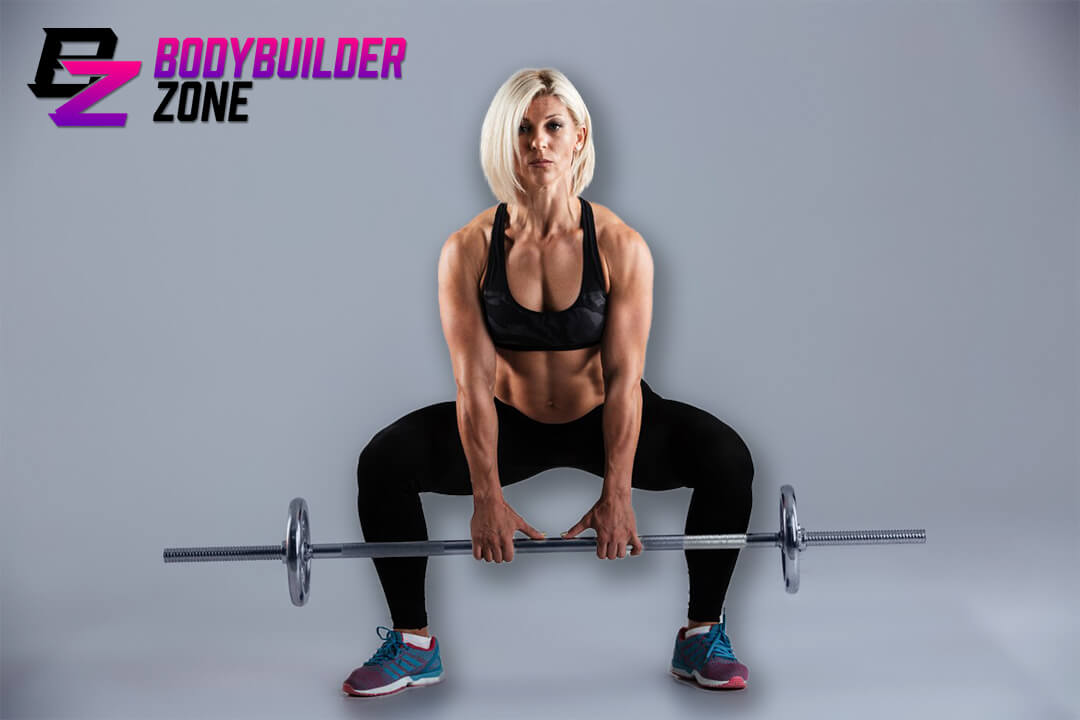
Because they work huge muscle groups and several joints, squats are one of the most crucial exercises for developing lower body strength. The main advantages of strength gains are the following:
- Power of the lower body
The muscles used for sprinting, jumping, and even lifting are strengthened by squats, which helps athletes become more powerful and resilient.
- Whole-body consistency
In addition to working the legs, squats also strengthen the lower back and core, which promotes stability in other exercises and daily activities.
- Strength overload in progress
Modifications to squats include adding weights for progressive overloading, which is regarded as one of the foundations of gradually increasing strength.
A correct squat improves the strength and stability of the quadriceps, hamstrings, and glutes, which contributes to better sports performance and everyday functional motions.
Muscle Hypertrophy
For people who want to increase their muscular mass, squats are one of the best workouts. Significant focused lower-body muscular activation is the ideal combo for producing muscle growth while significantly raising weight. The principal benefits of muscle growth are like these:
- Elevated muscle activity
The quadriceps, glutes, and hamstrings are significant big muscular groups that are strongly stimulated by squats and have a tremendous deal of potential for muscle growth.
- The hormonal reaction
Growth-promoting hormones, such as human growth hormone and testosterone, are secreted as a result of the physical demands of squats and are crucial for muscular building.
- Weight and rep adjustments
By varying the number of repetitions, sets, or weights, or vice versa, squats may be modified to meet hypertrophy objectives and provide a range of muscle-building intensities.
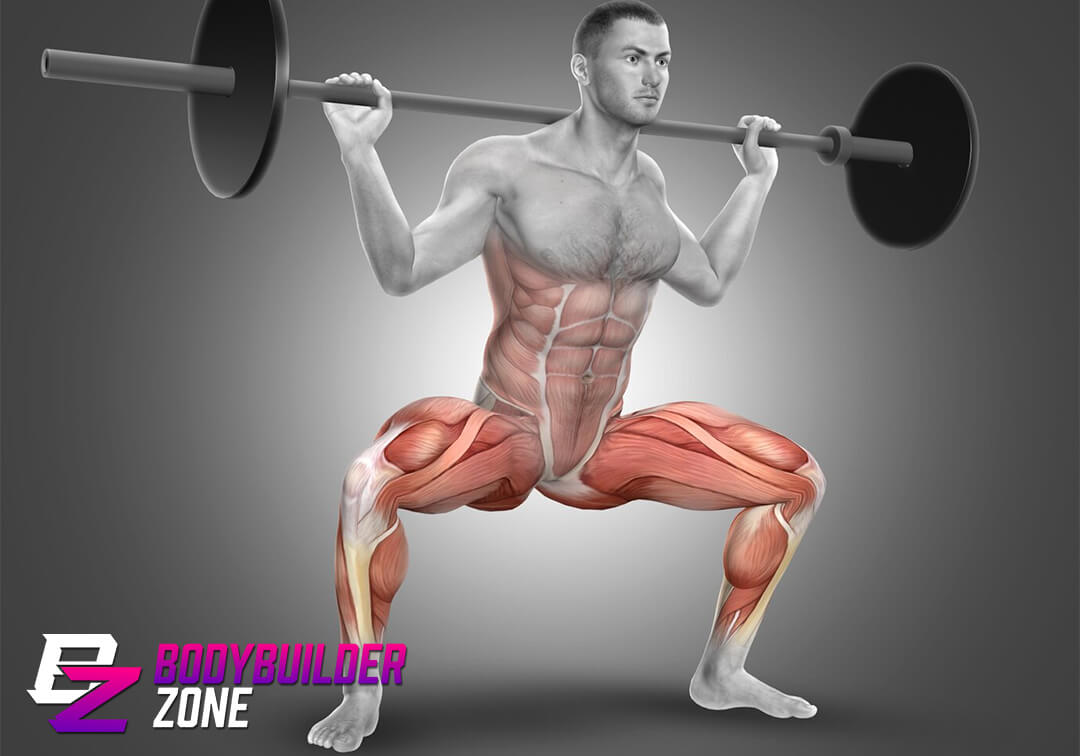
If you continue to perform squats regularly, utilizing the appropriate variations with the optimal resistance, you’ll be astounded at how much you’ll gain in terms of both strength and size.
Different Squat Variations
Squats come in a variety of forms that vary in how they work the lower body to increase strength, stability, and mobility. You may target muscles, achieve specific training objectives, and avoid plateaus by using the many squat variations. Let’s examine some of the most often used squat variants in more detail, as well as how to incorporate them into a more comprehensive training program.
- Bodyweight squat. It emphasizes technique and mobility without the need for extra weight and is ideal for beginners. Perfect for warming up, activating the lower body, and practising the depth and control of squats.
- The goblet squat. With a dumbbell or kettlebell at your chest, the goblet squat works your legs and puts some emphasis on your core.
- Back squat with a barbell. The power motion known as the barbell back squat enables the use of larger weights while increasing the loading of the quadriceps, glutes, and core.
- Frontal squat. The quadriceps and core are naturally given more attention during a front squat when a barbell is held in front of the shoulders.
- Squat split. A unilateral exercise that works one leg independently of the other, the split squat targets the quadriceps and glutes while enhancing balance.
| Squat variation | Main muscles targeted | Best for | Equipment needed |
| Bodyweight squat | Quadriceps and glutes | Form, mobility, endurance | None |
| Goblet squat | Quadriceps, core and glutes | Beginner strength, posture | Dumbbell/kettlebell |
| Barbell back squat | Glutes, core and quadriceps | Strength, muscle growth | Barbell |
| Front squat | Quadriceps and core | Quad focus, posture | Barbell |
| Split squat | Glutes and quadriceps | Balance, unilateral strength | Optional dumbbells |
All squat types contribute differently to a well-rounded and efficient lower-body training program, regardless of your goals: increasing strength, improving mobility, or correcting imbalances.
| Exercise | Sets | Reps | Rest between sets | Focus |
| Bodyweight squat | 3 | 12–15 | 30 seconds | Warm-up and mobility |
| Goblet squat | 4 | 10–12 | 60 seconds | Core engagement, form |
| Barbell back squat | 4 | 6–8 | 90 seconds | Strength, muscle growth |
| Front squat | 3 | 8–10 | 90 seconds | Quadriceps, posture |
| Split squat | 3 per leg | 10–12 | 60 seconds | Balance, unilateral work |
| Cool-down stretching | 1 | 3–5 mins | – | Flexibility and recovery |
By including many squat variants in your program, you may target different muscle groups, increase your functional strength, and keep your workouts interesting. Strength, hypertrophy, and functional balance are the main goals of this program, which works all of the major leg muscles.
Common Mistakes in Squatting
Even though squatting is a powerful workout, proper technique is necessary to reap the benefits and avoid injury. You may improve your technique for safer, more effective training by being aware of these mistakes:
- Caving knees
One typical error that strains the knee joints is letting the knees “valgus collapse,” or cave in. This might result in future injuries and could be caused by weak glutes or instability.
Correction: be mindful of pushing the knees outward throughout execution. To picture this, try “spreading the floor” with your feet to work your glutes and bring your knees and toes into alignment.
- Too much forward-leaning
When doing a squat, if you lean forward too far, the majority of your weight will be placed on your lower back. This can strain your lower back and reduce the effectiveness of the activity for your legs.
Correction: keep your torso upright, brace your core, and raise your chest. In addition to practising front squats, completing some core exercises might aid with this.
- Lifting off the ground with the heels
Ankle immobility or an uneven weight distribution are the most common causes of this. This lessens the stability of the squat and transfers the strain to the knee.
Correction: when standing up, concentrate on pressing through your heels while maintaining your weight there. To balance out, attempt to expand your stance a little bit during the squat and perform ankle mobility exercises.
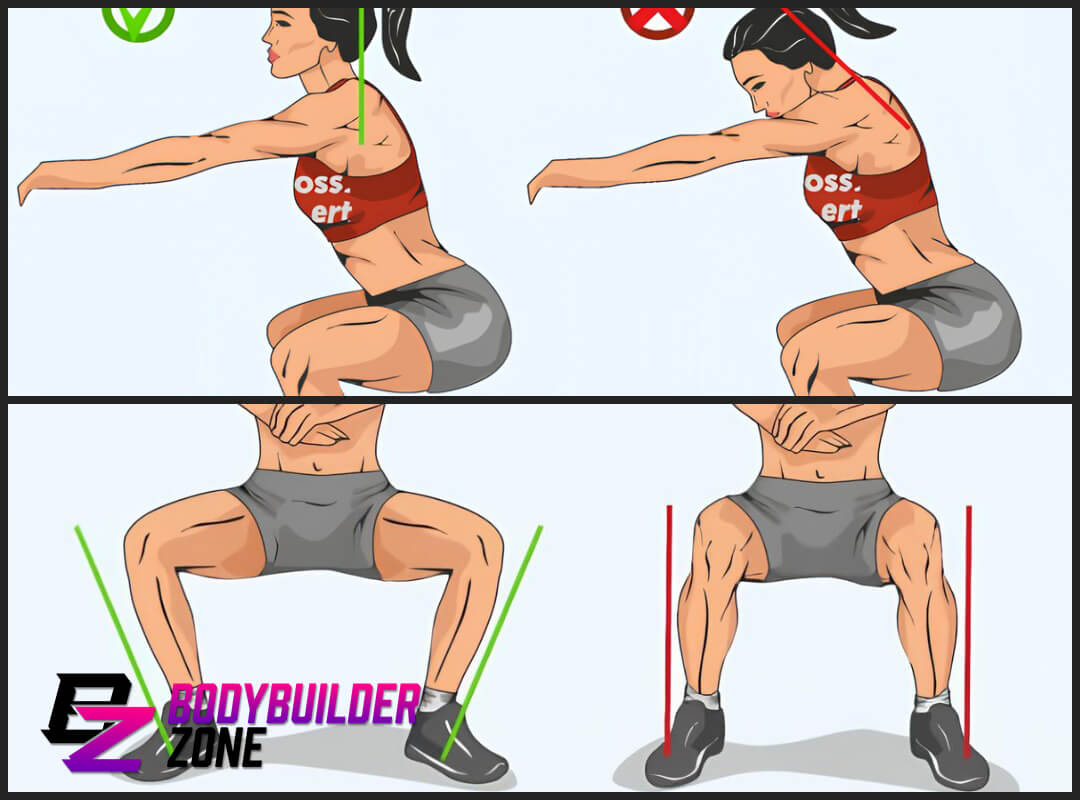
To increase the effectiveness of your squats and, consequently, your overall lower body strength, start focusing on perfect technique and mobility exercises.
Conclusion and Recommendations
Fundamental lower body strength, balance, and functional fitness are all important while learning how to do the squat. Understanding the advantages, correct form and typical blunders will enable you to get the most out of this efficient workout, whether your goal is to increase your strength, muscular mass, or athletic ability.
| Recommendation | Description | Benefits |
| Prioritize form overweight | Prioritize adequate technique over increasing load to promote safe and appropriate muscle activation. | Reduces injury risk, and enhances gains. |
| Incorporate variations | To add variation and target various muscles, try goblet, front, and split squats. | Prevents plateaus, and engages the core. |
| Practice consistent progression | To maintain challenging muscles for growth, progressively increase the weights, repetitions, or level of difficulty. | Builds strength, and encourages growth. |
| Track your progress | To keep track of progress and sustain motivation, note weights, repetitions, and modifications. | Measures improvement, and keeps focus. |
| Work on mobility | Incorporate mobility exercises for the ankle, hip, and core on a regular basis to enhance squat depth and control. | Improves flexibility, and aids in form. |
In addition to working your legs, squats also strengthen your core, increase your stability, and are among the most adaptable exercises you can do. By using these suggestions, you will improve the way you squat, get greater results, and position yourself for long-term success in terms of your fitness and health.








Leave a comment