



The 5-day program is designed for people who want to achieve significant and outstanding physical results. This is a fairly intense training plan and is not suitable for beginners. More experienced athletes who are looking for significant strength gains, muscle hypertrophy or fat burning should try this program. During the 5 days of training, each muscle group is effectively involved and thoroughly worked out.
This 5-day workout plan includes complex movements and isolation exercises for comprehensive development. Each day is dedicated to a specific muscle group and body part for better development. Remember that this program is highly recommended for beginners, as it is too intense and difficult.
- Advantages of a 5-Day Split
- Comprehensive Coverage of Muscle Groups
- Allowing for More Focused Training
- Sample 5-Day Workout Routine
- Day 1: Chest and Triceps
- Day 2: Back and Biceps
- Day 3: Legs
- Day 4: Shoulders
- Day 5: Core and Cardio
- Tips for Success
- Importance of Rest Days
- Adapting the Program to Your Needs
- Tracking Progress and Making Adjustments
- Assessing Your Performance
- Modifying the Routine as Needed
Advantages of a 5-Day Split
Many athletes like this training regimen because of its numerous benefits. Essentially, the 5-day program helps you to build muscle growth and target weak regions with workouts to stay up with other muscle groups. The primary advantages of the 5-day split are the following:
- Increase muscle size
Training each muscle group independently allows for more sets and repetitions, which boosts muscular activation and hypertrophy.
- Focused training
By focusing on only a few muscle groups every day, you may improve your technique, lift more weight, and gain strength.
- Better recovery
Because you are not working the same muscle area twice in a row, each muscle gets a chance to rest and repair before the following session.
- Proper sequence
The 5-day program promotes regularity and consistency, making it simpler to establish habits and achieve your objectives. Each muscle part in the body is exercised regularly, which leads to greater outcomes.
- Concentrate on weaker areas
Isolating muscle groups helps you to concentrate on weak regions that need extra attention.
This split is particularly effective for intermediate and advanced athletes looking to raise the volume and intensity of their training. If you do not have adequate experience, you should talk with a trainer before selecting the best program for you. This is required to reap the full benefits of this 5-day split.
Comprehensive Coverage of Muscle Groups
One of the benefits of the 5-day workout regimen is that it fully works for all muscle groups. Each exercise targets a specific body area, ensuring that no muscle is left behind. Let’s look more closely at the aims of your everyday workout routine.
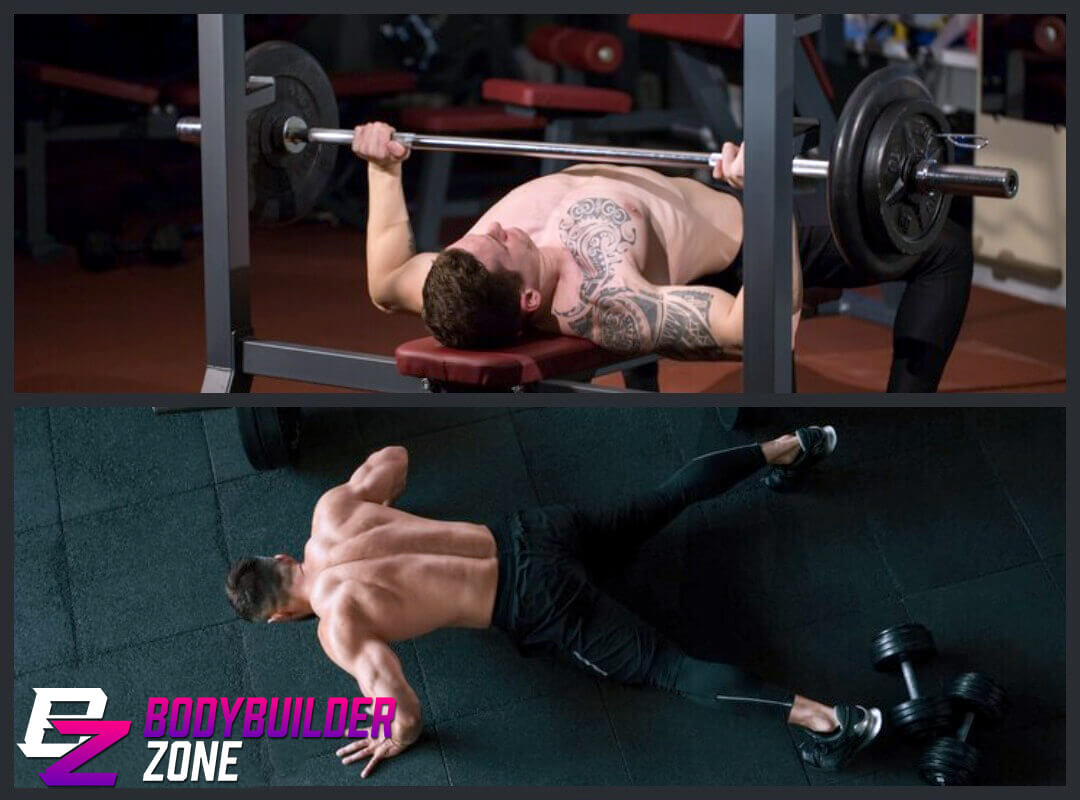
- Chest and triceps day. High-intensity workouts, such as the bench press, target the chest, whereas push-ups target the triceps and provide adequate activation.
- Back-and-biceps day. Pulling exercises, such as deadlifts and rows, train the back, whereas curls isolate the arms, increasing strength and size.
- Leg day. Squats and deadlifts are compound movements that engage the quads, hamstrings, and glutes, giving you a full lower-body workout.
- Shoulder and abs day. Presses and lateral raises develop and sculpt the shoulders, while squats and planks engage the core.
- Body recovery day. A set of exercises designed to keep muscle groups balanced and help in recuperation.
This design guarantees that all major and minor muscle groups are constantly exercised, which promotes healthy growth and prevents muscular imbalance.
Allowing for More Focused Training
This program allows you to focus on fewer muscle groups every exercise, allowing you more time and energy to work on your form and technique. This degree of concentrated training enhances muscle recruitment and performance. Focusing all movements in each workout on one or two body parts allows you to:
- Increase intensity
With greater rest and attention, you will be able to lift heavier weights and complete more sets, resulting in increased strength and muscular growth.
- Target weaknesses
With more time, you’ll be able to concentrate on specific flaws that may need more attention or rectification.
- Use exercise variety
A tailored approach allows you to execute a broader range of exercises per muscle group, resulting in more activation and growth.
This provides proper muscular activation, which leads to greater strength, hypertrophy, and general fitness. Also, such a focused program gives a more pronounced result and muscle relief, improving your appearance.
Sample 5-Day Workout Routine
The 5-day workout program is designed to teach strength training techniques to all major body groups in one week. It also maintains balance so that your body is not overworked by tiring sets. Below we will detail the exercise routine for each of the 5 days of the plan.

Day 1: Chest and Triceps
On the first day of the program, you should focus on pressing movements. This will work the muscle groups in the chest and triceps area. The most suitable exercises and their number of sets and repetitions are the following:
- Barbell bench press: 4 sets of 6–8 reps
- Incline dumbbell press: 3 sets of 8–10 reps
- Dips on the bars: 3 sets of 10–12 reps
- Cable flyes: 3 sets of 12–15 reps
- Skull crushers: 3 sets of 10–12 reps
- Triceps extensions: 3 sets of 12–15 reps
Do not forget about the correct technique, and we also advise you to use medium weight or the one you are used to training with.
Day 2: Back and Biceps
On the second day, you should focus on working your back with pulling movements and bicep isolation for arm growth. This is a smooth transition from the first day, which will even distribute the load on the upper muscle groups of the body:
- Deadlifts: 4 sets of 5 reps
- Pull-ups or Lat pulldowns: 4 sets of 8–10 reps
- Barbell rows: 3 sets of 8–10 reps
- Dumbbell rows: 3 sets of 10–12 reps
- Barbell curls: 3 sets of 10–12 reps
- Hammer curls: 3 sets of 12 reps
Take enough rest between sets. If you want to increase the intensity, rest no more than 45–60 seconds to keep the muscles tense and not relax.
Day 3: Legs
Day 3 of training focuses on exercises for the legs. You will train your lower body with compound exercises to build strength and power in the quads, hamstrings, and glutes. The best exercises and number of sets and reps are:
- Barbell squats: 4 sets of 6–8 reps
- Romanian deadlifts: 3 sets of 8–10 reps
- Leg press: 3 sets of 10–12 reps
- Walking lunges: 3 sets of 10–12 reps (each leg)
- Leg extensions: 3 sets of 12–15 reps
- Calf raises: 4 sets of 15–20 reps
If you experience severe muscle soreness, then next time take more rest between sets. You can also reduce the free weight of the machine and set it to 25–45 kg (55–100 lbs).

Day 4: Shoulders
Day number four should be focused on developing the shoulder muscles. The athlete will work on them, and the exercises below will help develop shoulder strength and definition with pressing and isolation movements:
- Overhead press, barbell or dumbbell: 4 sets of 6–8 reps
- Lateral raises: 3 sets of 12–15 reps
- Front raises: 3 sets of 10–12 reps
- Rear delt flys: 3 sets of 12–15 reps
- Arnold press: 3 sets of 8–10 reps
- Shrugs: 4 sets of 10–12 reps
Please note that during these exercises, not only your shoulders will be involved in the work. The chest, back and arms will also be involved in the development.
Day 5: Core and Cardio
The last day of the training program should end with cardio and core exercises. This stimulates the improvement of endurance and the reduction of excess weight, so you should use the following set of exercises:
- Plank: 3 sets of 60 seconds
- Russian twists: 3 sets of 20 reps (each side)
- Hanging leg raises: 3 sets of 12–15 reps
- Bicycle crunches: 3 sets of 20 reps
- Mountain climbers: 3 sets of 30–45 seconds
- Cardio (running, cycling, or HIIT): 20–30 minutes
This 5-day training routine targets each major muscle group throughout the week. By working on new regions every day, you may increase strength and size without overtraining, while also ensuring recuperation and improvement. On the last day, combine core training with cardio to maintain a balance of strength and general fitness.
Tips for Success
It is not enough to just choose a program and start following it, because many factors influence success. This includes maintaining regularity, proper rest, and getting your body used to the training plan. Below, we will discuss in more detail some important tips that an athlete should follow if he wants to achieve results.
Importance of Rest Days
Rest days are part of your training strategy, particularly day 5. This is the day when your muscles recover, regenerate, and get stronger after a strenuous workout. Inadequate rest raises the risk of injury, overtraining, and burnout. Here’s why rest days are so vital for all athletes:
- Muscles require time to recuperate from injuries sustained during exercise. Rest days slow down the process, resulting in greater strength and muscle gain.
- Training without rest can cause physical and mental weariness, reducing your gym performance.
- Overworking muscles and joints without appropriate recuperation increases the likelihood of injuries such as strains, sprains, and overuse.
Resting at least two days each week is necessary to preserve physical function, particularly after severe leg or full-body workouts.
Adapting the Program to Your Needs
Everyone’s body reacts differently, so tailoring your exercises might help you get greater results and prevent disappointment. Here are some recommendations for adjusting your plan:
- Modify workouts to prevent damage. If you have any injuries or limits, replace those workouts with safer options.
- Adjust the machines’ weights and intensities. You might begin with smaller weights and fewer sets, gradually increasing your strength and endurance.
- Remember to listen to your body and avoid overexertion. If you are fatigued or painful, lessen the intensity of your exercises.
Tailoring your program to your specific demands and getting enough rest will allow you to make consistent progress and achieve your fitness objectives more efficiently.

Tracking Progress and Making Adjustments
To understand whether you are making progress in your training, you need to record your results. This includes tracking various indicators, such as weight, external changes, endurance and strength.
Assessing Your Performance
To guarantee that you are making progress with your 5-day workout regimen, you must routinely assess your outcomes. This will allow you to track your progress, discover flaws, and stay motivated. The major methods for evaluating your performance are:
- Make a workout journal that includes the weights you lift as well as the number of reps and sets you perform for each exercise. Consistent strength improvements over time are indicative of growth.
- You may track your progress using images, body fat percentage, and a tape measure. This is a wonderful approach to monitoring muscle size and fat loss improvements.
- If aerobic activity is part of your strategy, keep note of how long you can perform high-intensity exercise. Running and cycling are two good examples.
- Take note of how quickly you recover between sets and sessions. Faster recuperation might mean that your health or condition is improving.
So, to sum it up, if you evaluate regularly, you can be sure that your efforts in the gym are bringing results. It is worth doing this regularly, at least once a week or two weeks, and then comparing them with each other.
Modifying the Routine as Needed
We have demonstrated in the table how the program can be updated based on progress and goals. Adjusting weight, volume, intensity, and training routines promote ongoing growth and speedier outcomes.
| Modification | When to Apply | How to Implement | Example |
| Increase Weights | ◦ When exercises feel too easy. ◦ When you’re completing sets with ease. | Add 2.5–5 kg or 5–10 lbs to compound lifts. Add 1–2 kg or 2–5 lbs to isolation exercises. | Increase bench press from 60 kg to 65 kg or 135 lbs to 145 lbs. |
| Change Exercises | ◦ Every 4–6 weeks to avoid plateaus. ◦ To target muscles from different angles | Swap similar exercises that focus on the same muscle group. | Replace barbell squats with goat squats.Replace pull-ups with lat pulldowns. |
| Adjust Volume | ◦ If you’re plateauing or feeling overtrained. | Increase reps or sets for hypertrophy. Decrease reps or sets for more recovery. | Change 3 sets of 10 reps to 4 sets of 12 reps for hypertrophy.Decrease from 4 sets to 3 for recovery. |
| Periodization | ◦ When focusing on different training goals. | Cycle through phases: strength, hypertrophy, endurance. | 4 weeks of heavy lifting (low reps), followed by 4 weeks of moderate weight (higher reps). |
| Add Deload Weeks | ◦ Every 6–8 weeks. ◦ If feeling fatigued or stalled. | Reduce weight and intensity by 50% for one week. | Decrease squat weight from 100 kg to 50 kg or 220 lbs to 110 lbs, and perform fewer reps. |
Modify the 5-day training regimen as you see fit, because your comfort and well-being rely on it. Remember to make frequent modifications to your training routine to stay motivated, avoid injuries, and achieve long-term improvements in strength, endurance, and muscular growth.
















Leave a comment