


Benefits of Home Workouts for Core Strength
Building core strength without necessarily going to the gym is now possible with at-home training. For people with hectic schedules, training from home may be quite beneficial because it eliminates the need to drive to and from the gym. You only need a little area and a few pieces of equipment to start building a robust, core-strengthening practice that works with your schedule.
The majority of bodyweight exercises used in at-home workouts target the core in several ways and contribute to the development of stability and functional strength. Core exercises may therefore lay a very strong foundation for general fitness:
- Convenience and flexibility
Home exercises make it simpler to be consistent since they let you set up a timetable for yourself at a time that works best for you.
- Cost-effective
One just has to purchase a few items of equipment, such as a mat or resistance bands, and no gym membership is necessary.
- Enhanced functional strength
Balance, stability, and coordination are further enhanced by isometric bodyweight core workouts like planks and mountain climbers.
- Comfort and privacy
One feels much more at ease and is much more intent on form and technique while working in a familiar environment.
- Customized routines
You may modify your workout at home to meet your current level of fitness and up the ante as you grow more fit.
One efficient way to increase core strength and stability without having to leave the comforts of home is to incorporate at-home workouts into one’s regular physical activity regimen. You will eventually gain significant strength in your level of core fitness while maintaining the ease and comfort of your personal space.
Essential Home Core Exercises
One of the best core workouts for increasing strength is the plank and bicycle crunches. Stability and control are necessary for this static hold, which works the whole core, including the glutes, lower back, and abs.
Planks
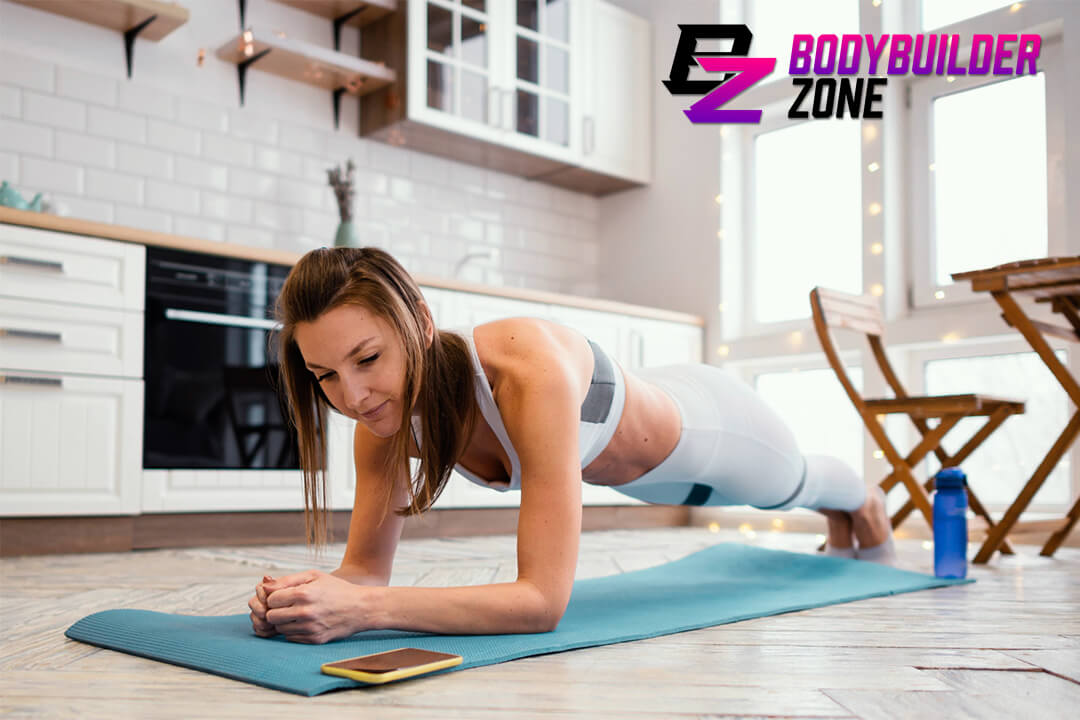
One of the best core workouts for increasing strength and stamina is the plank. It addresses the whole core, which needs stability and control, from the abs to the lower back and even the glutes, with its static hold.
They can be readily adjusted to accommodate any level of fitness, planks are ideal for both total beginners and experienced exercisers. Keeping your body in a straight line from your shoulders to your heels while using your core is crucial. It’s a sample plank workout routine for you:
| Exercise | Duration | Sets | Rest |
| Standard plank | 30–60 seconds | 3 | 30 seconds |
| Side plank (right) | 20–30 seconds | 3 | 15 seconds |
| Side plank (left) | 20–30 seconds | 3 | 15 seconds |
| Plank with leg lift | 15 each leg | 2 | 20 seconds |
If you want to do the exercise properly, then keep your shoulders piled over your elbows and your body in alignment. Also, try to keep your hips from sagging and engage your glutes and core. Do longer planks or various variations, such as plank leg lifts, as your strength increases.
Bicycle Crunches
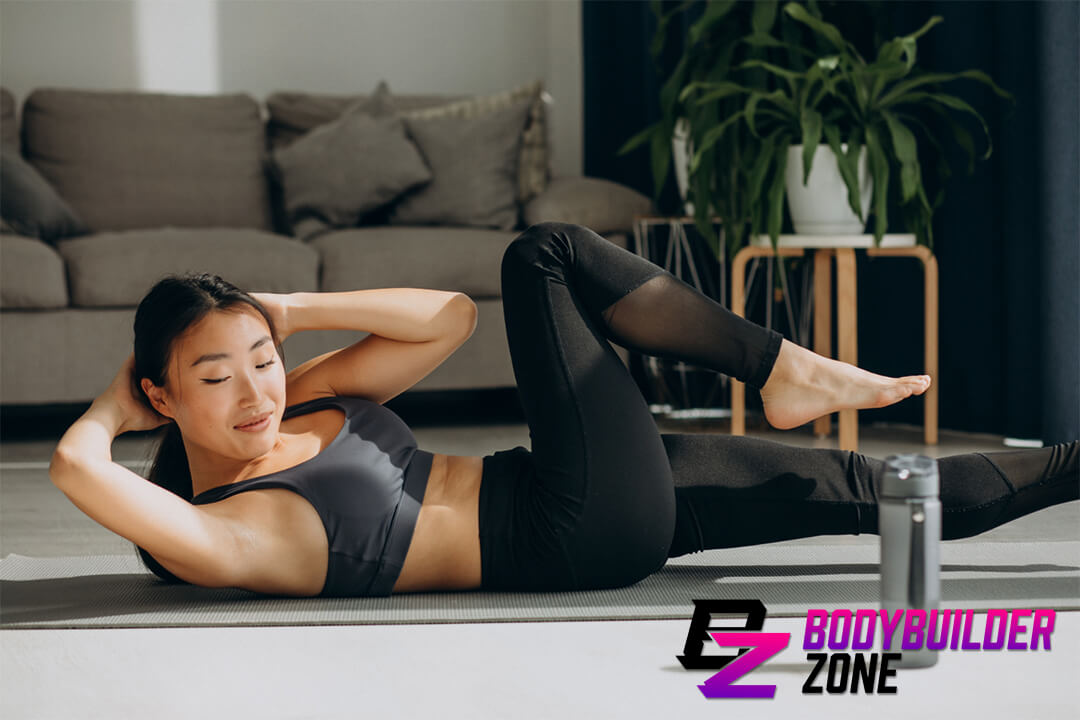
During exercise, bicycle crunches work the rectus abdominis and obliques. The dynamic action is very good in toning and strengthening the abdominal muscles because it simulates a pedalling motion and works on the entire range of motion. These bike crunches can be modified for any level of fitness and are great for developing core endurance and coordination:
| Exercise | Repetitions (each side) | Sets | Rest |
| Basic bicycle crunches | 15–20 | 3 | 30 seconds |
| Slow bicycle crunches | 10–12 | 2 | 20 seconds |
| Bicycle crunch hold | 10-15 seconds | 2 | 20 seconds |
While doing bicycle crunches avoid pushing on your neck and use smooth motions when performing bicycle crunches. As you concentrate on the contractive movement where your opposing knee and elbow will connect, keep your elbows wide. To make this exercise more challenging, you can choose to slow it down or keep the contracted position for a little time.
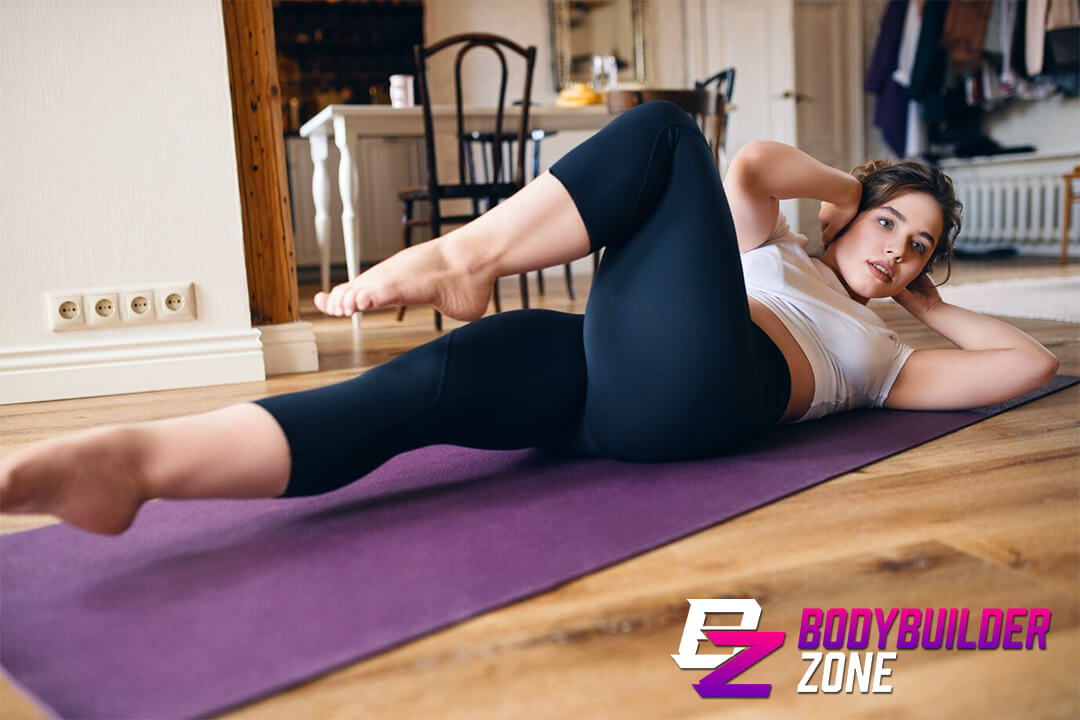
Adding these 2 exercises – planks and bicycle crunches will give you a strong, resilient core that plays a very important role in one’s fitness. Both these exercises have variations, are effective, and can easily be done at home, which makes them both vital parts of any core-strengthening workout.
Creating a Home Workout Routine
A good regimen should combine strength and aerobic workouts, work for all the major muscle groups, and be flexible enough to accommodate your current fitness level. Making progress in this way guarantees more freedom and ease in day-to-day living. You can start by thinking about the following actions:
- Choose core exercises
Include exercises that work the arms, legs, back, chest, and abs for a well-rounded workout. Planks, push-ups, and squats are just a few of the highly helpful bodyweight exercises that will be demonstrated in depth for beginners without requiring any equipment purchases.
- Incorporate variety
Adding variety to your exercises can keep them fresh and prevent them from plateauing. You may incorporate flexibility, cardio, and strength training into your weekly routine.
- Schedule workout days
Decide when you want to work out, aiming for three to four days a week at the very least. In order to give your body a break between workouts, you must alternate between different muscle groups or locations.
- Monitor the progress
Keep track of your workouts, sets, repetitions, and any notes or challenging sensations. You’ll be able to measure your development more precisely that way.
We want to give you an example of a weekly home workout routine. Especially it is perfect for beginners who don’t know what to begin with:
| Day | Focus | Exercises |
| Monday | Upper body | Push-ups, planks and tricep dips. |
| Tuesday | Lower body | Squats, lunges and calf raises. |
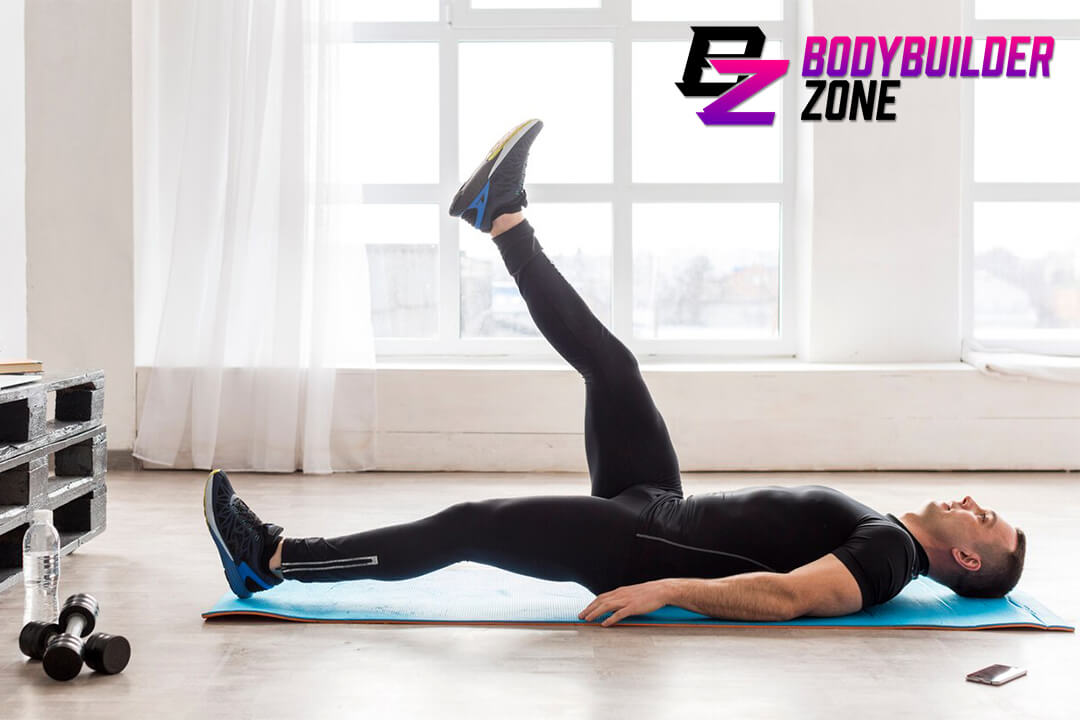
| Wednesday | Core | Bicycle crunches, Russian twists, leg raises. |
| Thursday | Cardio and abs | Jump rope, mountain climbers and planks. |
| Friday | Full body strength | Burpees, plank-to-push-up and bodyweight rows. |
| Saturday | Stretch and recovery | Yoga or stretching routine. |
| Sunday | Rest | – |
Every workout should begin with a warm-up to prepare your muscles and end with a cool-down to aid in your body’s recovery. As your strength increases, progress through each exercise by adding weight or increasing the number of repetitions to keep pushing yourself.
Tips for Staying Motivated
Maintaining motivation throughout a workout can be difficult at times, particularly over an extended period. You can stay motivated and focused on your fitness journey by setting clear goals, figuring out how to make working out enjoyable, and monitoring your progress. Here’s a summary of some advice to keep you inspired and dedicated to your at-home exercise regimen.
- Establish clear goals
You can better grasp your requirements and wants if you have specific goals. Establish modest, attainable objectives for yourself first, like exercising three days a week, and then work your way up to more ambitious ones. You get more motivated when you reach these small goal markers.
- Create an exercise program you’ll enjoy
Engage in the type of exercise you enjoy and change it up. If you like dancing, think about including a dance-based workout; if you like strength training, try bodyweight exercises. Exercise is more likely to be maintained if it is enjoyable.
- Reward yourself
Make it such that you reward yourself with new exercise equipment, your favourite food, or anything calming when you reach your weekly or monthly goals. Incentives indeed make hard labour more worthwhile.
- Stay accountable
To stay motivated and engaged, choose an online network or a workout partner. Having someone with whom to discuss your journey’s success and staying on track with your routines makes a huge impact.
- Celebrate small victories
Every little improvement, like holding the plank a second or two longer, or perfecting the form is an accomplishment that deserves recognition. Acknowledge these small victories as stepping stones to larger objectives.
By employing these strategies, you will establish a consistent motivation is a principle that will keep you motivated to keep working out. Because each workout gets you closer to your objective, consistency is crucial.
Conclusion and Progress Tracking
The 3 main components of a successful at-home fitness regimen are consistency, dedication, and flexibility. Planks, bicycle crunches, and other fundamental exercises can help you strengthen your core, which will provide stability, balance, and a strong basis for increased general fitness. You can attain significant outcomes from the convenience of your own house if you are committed to your routine.
Monitoring one’s development is crucial since it encourages motivation and more change. Recording each workout can let you see the progress over time and make any necessary modifications. In addition to highlighting your achievement, this method will fortify your determination because tangible evidence of your diligence will now be visible.
| Tracking method | Purpose |
| Workout journal | Record sets, reps, and notes on difficulty or improvements. |
| Weekly measurements | Track waist, hip, and other key measurements to see physical changes. |
| Progress photos | Take photos every 2–4 weeks to visually capture changes in physique. |
| Performance metrics | Monitor specific abilities, like plank hold duration or crunch reps. |
By combining various monitoring techniques, you create a feedback loop that increases your motivation and pushes you to persevere. As you progress, modify your objectives and workouts to ensure that you are always pushed and meet new benchmarks. You are already on the verge of long-term fitness achievement since you have a well-organized strategy and have monitored your progress.













Leave a comment