



Introduction to Bicep Workouts
Building strong biceps is one of the most popular goals among bodybuilders since well-developed arms enhance upper body strength and look beautiful. Bicep exercises are crucial for people who want to increase the size and endurance of their arm muscles. Your performance in various sports and even everyday tasks will undoubtedly increase if you concentrate on doing good bicep exercises, regardless of how long you’ve been training. A thorough description of bicep exercises, including their nature, form, and typical faults, may be found below.
The biceps have two major heads. The long head runs along the outer arm and contributes to the muscle’s peak. The short head, which rests on the inside of the arm, contributes to its overall stability and thickness. Each head facilitates forearm supination and elbow flexion. Understanding this anatomy is required to choose workouts that will balance the two heads in their growth.
Exercises for the biceps are important from an aesthetic perspective, but they also have many useful advantages, such as:
- Arm strength
Lifting, pushing, and pulling tasks become easier with stronger biceps.
Improved
- Improved athletic performance
Arm and grip strength are severely tested during sports like throwing, rowing, and grappling with an opponent.
- Injury prevention
By giving the elbows and shoulders more stability, strengthening the biceps may also help to reduce overall tension during upper body movements.
Strength and endurance must match while exercising the biceps. A thorough understanding of the muscle’s anatomy, the selection of various exercises, and proper technique are all necessary to develop strong, toned biceps, which are crucial for total upper body strength and performance.
Top Bicep Exercises
Building strong, well-defined biceps required intense and targeted activation of the long and short heads of the muscles. Dumbbells and barbells are used in some of the greatest biceps workouts because they provide different levels of resistance and muscle activation. The benefits and methods of dumbbell and barbell curls, two crucial exercises for total bicep development, are next covered.

Dumbbell Curls
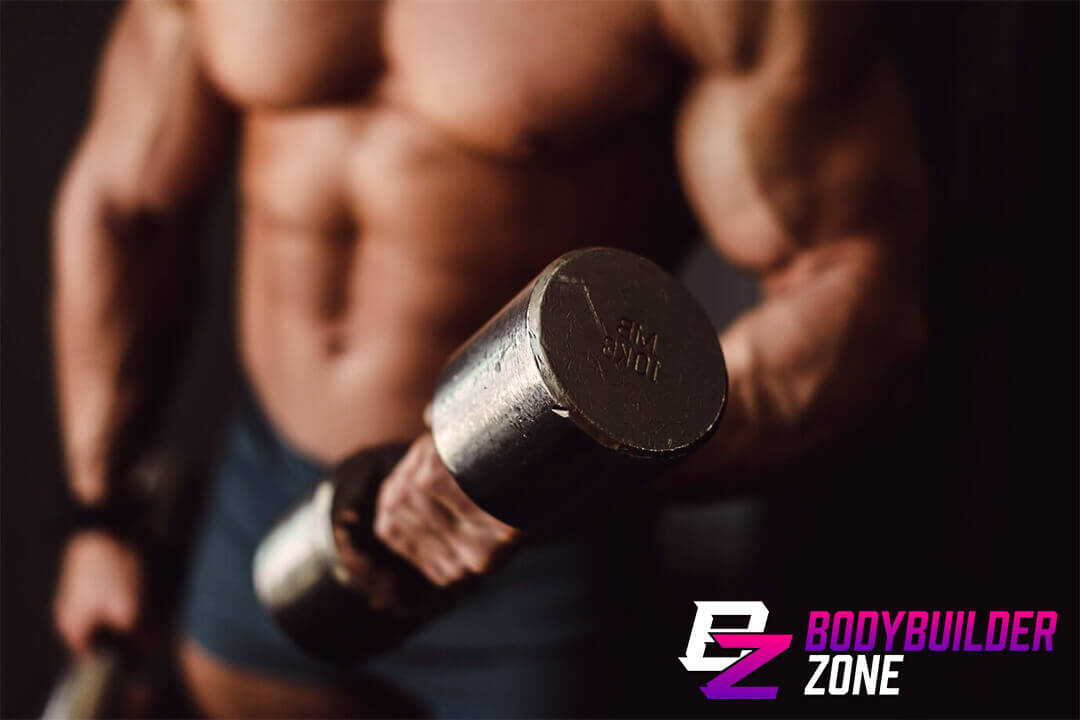
There are several uses for dumbbell curls, and they work well for the biceps. Because each arm must work independently during dumbbell curls, the arms’ unequal muscular growth is balanced, increasing their symmetry. Below we want to share with you exactly how to perform the exercise:
- Starting position
Hold a dumbbell in each hand, arms outstretched, palms facing front, while standing erect.
- Curl
Keep the elbows as near to the body as you can while slowly exhaling and curling the dumbbells toward the shoulders.
- Top of curl
Squeeze your biceps for a brief moment at the top, when the weights are shoulder height.
- Lowering phase
Take a breath and carefully return the dumbbells to their initial position.
There are some types of dumbbell curls like alternating, hammer and concentration curls. It is best to perform this type of exercise in several approaches. The optimal option may be 3–5 approaches of 15–25 repetitions. Perform dumbbell curls slowly, you should feel the muscle group being worked.
Barbell Curls
Barbell curls are regarded as one of the basic biceps workouts, which allow lifters to utilize larger weights to promote strength and muscular growth. The size and peak of the muscle are mostly due to the lengthy head of the biceps. Both arms must cooperate since the hands are fastened on the bar, ensuring that the biceps acquire strength equally. How you should do barbell curls properly:
- Starting position
Take an underhand hold of the barbell with your arms fully extended, keeping your feet shoulder-width apart.
- Curl
As you exhale and start the curl up to your chest, try to maintain your elbows as stable and against your body as you can.
- Top of curl
Squeeze your biceps at the top of the curl to get a brief hold of the bar at your chest.
- Lowering phase
Take your time, breathe, and control the movement as you lower the bar back down to the beginning.

As for barbell curl variations, there are wide-grip, close-grip and EZ bar curls. Concluding, we can say that dumbbell and barbell curls are complementary biceps workouts. These exercises guarantee that a person’s bicep muscles expand and strengthen in a well-rounded manner during every given workout.
Importance of Form in Bicep Training
When doing bicep exercises, proper form is crucial for maximizing muscle activation, reducing damage, and regulating muscular development. The biceps will be isolated with each proper action, guaranteeing that they are used continuously and without the aid of other muscles. This will reduce the likelihood of a strain or injury and ultimately produce better outcomes.
Using proper technique will improve workout safety and efficacy, among other advantages. It gives the biceps full muscle activation, resulting in a full contraction with each repetition. Additionally, the right form reduces joint stress, particularly on the often damaged elbow and wrist joints.
The table below lists several essential form components that aid in the best possible biceps training along with an explanation of each concerning exercise quality.
| Form element | Description | Impact |
| Controlled movements | Lifting and lowering weights steadily, without swinging. | Ensures full bicep engagement, and prevents use of momentum. |
| Elbows close to the torso | Keeping elbows near the body throughout the movement. | Isolates biceps, and reduces shoulder strain. |
| Full range of motion | Completing the entire movement, from full extension to peak contraction. | Maximizes muscle engagement and development. |
This can warn you about making common mistakes and preventing injuries. The following advice will help you do bicep workouts with the correct form:
- Start with a little weight
To assist one learn movement and control, start with a little weight.
- Stand tall with your core engaged
This will make your torso the most solid and remove any chance of swaying.
- Make slow repetitions
The more slowly you move, the more you may accentuate the contraction of your muscles and the less likely you are to abandon form.
By putting form first in biceps workouts, you may improve muscle detail, prevent injuries, and raise your overall efficacy for more successful training.
Frequency and Volume for Bicep Growth
Bicep training frequency is essentially determined by one’s objectives, total training regimen, and cumulative experience. In general, once a week to up to three times a week is a good frequency for biceps development. While 2 to 3 sessions per week produce the best benefits for intermediate and expert levels, one session per week may be enough for beginners. Regular training, such as 3 times a week, is more effective when it is brief and focuses on a reasonable volume to prevent overtiredness.
Depending on how many days one exercises, a solid biceps workout would typically include 6–15 sets each week. Biceps training, for instance, can be effective for development if done twice a week with three to four sets each session, or once a week at a higher volume. The results may also be altered by varying the number of repetitions: lower repetitions 4–6 concentrate more on strength, while higher repetitions 8–12 aim for hypertrophy. A sample frequency and volume split by training level is provided in the table below:
| Training level | Frequency (days/week) | Sets per session | Total weekly sets |
| Beginner | 1–2 | 3–4 | 6–8 |
| Intermediate | 2 | 3–4 | 10–12 |
| Advanced | 2–3 | 4–5 | 12–15 |
When figuring out how to mix frequency and volume, keep the following advice in mind to optimize biceps growth:
- Be in tune with your body by being aware of any discomfort or indications of exhaustion. Lower the frequency or volume if the recovery isn’t satisfactory.
- Strength and endurance are once again developed; to push the muscles even harder, up the number of sets or sessions.
- Alternate the exercises, rep ranges, and angles periodically. By doing this, you can make sure that you work additional muscle fibres and prevent plateaus.
By creating the ideal plan, you may lower the danger of overtraining by adjusting the frequency and volume to your level and biceps growth objectives.
Conclusion and Progress Tracking
With regular, carefully thought-out exercise, the biceps often gain a lot of bulk and strength. Tracking one’s development is necessary to maintain motivation and guarantee growth. The main exercises that contribute to the development of the muscle group are dumbbell and barbell curls, which naturally need proper technique and a training regimen.
You can determine if your training approach is effective or needs to be modified by monitoring your progress. As you see gains in strength, stamina, or muscle mass, documenting your progress helps you stay motivated and dedicated. These are practical methods for monitoring your biceps development
- Measurement
Using a measuring tape, measure once a month or every other week and record any size increases.
- Photos
Take progress pictures once every two weeks to track your improvements visually and identify any changes in the definition of your muscles.
- Strength milestones
Record specific accomplishments that demonstrate strength progress, such as lifting larger weights or performing more repetitions than previously.
Monitoring your routine’s progress enables you to stay on track and modify your program to keep improving. With regularity and devotion, it will help you get the most out of your bicep training and move closer to your fitness objective.












Leave a comment