



The most popular aspiration of athletes and bodybuilders is to gain weight. Large volumes improve appearance and physical fitness, so many want to achieve them. But it is quite difficult and requires a lot of time and effort to start seeing the first results. Even professional athletes needed several years to get closer to the desired shape – huge muscles and weight gain.
This article will consider which exercises are best suited for gaining weight. The most important term will be muscle hypertonia, a huge overload from which they are forced to actively grow. Without achieving hypertonia, you are unlikely to be able to get impressive results. Complex exercises, tiring workouts and heavy-weight machines are used for this.
- Principles of Muscle Hypertrophy
- Importance of Progressive Overload
- Role of Nutrition in Mass Gain
- Effective Mass Building Exercises
- Multi-Joint Exercises
- High-Intensity Techniques
- Designing a Mass Gain Program
- Workout Split and Frequency
- Recovery and Nutrition
- Tracking Progress and Adjustments
- Measuring Muscle Growth
- Making Adjustments to Your Routine
Principles of Muscle Hypertrophy
To achieve muscle hypertension, several conditions must be met. The main thing is to overload the muscles and constantly keep them tense. If you give them too little load, then hypertension will be impossible to achieve.
Importance of Progressive Overload
Let’s start with a definition of what progressive overload is in training. It is a type of strength training that gradually increases intensity to avoid a plateau in muscle mass and strength. Without progressive overload, muscle growth will stop.
The most important benefit of progressive overload is that it prevents you from reaching a point where your training plan is no longer effective. Thus, by using progressive overload, you can strain your muscles so much that your workout will be enough for them.
It is important to know that the principle of this method is based on the fact that the increase in time, weight or intensity should be within 10% or less each week. This is done so that the body gradually adapts to the loads. Also, a slow increase of 10% in indicators reduces the risk of injury.
Role of Nutrition in Mass Gain
The next important aspect of gaining mass in addition to progressive overload is proper nutrition. Your diet should be varied and contain a large number of nutrients for muscle growth. Let’s take a closer look at what an athlete’s diet should look like for gaining mass:
- Eat enough calories every day. Calculate your daily calorie intake for gaining mass and making a surplus. Thus, the daily amount of calories should be 400–500 more than the standard norm for your weight.
- Your diet should contain a lot of protein since it is necessary to restore muscle tissue. As a rule, adding 20–30 grams of additional protein per day is the optimal value. Also, if you eat a lot of protein but not enough calories, you will have a hard time training to build muscle mass.
- Exclude unhealthy foods from your diet. You should not gain your daily calorie intake by eating fast food and the like. This food is not healthy and your body will only absorb harmful substances, thereby gaining fat.

These are the main principles of nutrition for athletes who want to gain weight. Remember that you can’t create big muscles out of thin air, so you need protein foods for this. Most protein is found in meat, fish, eggs, nuts, red caviar, pumpkin seeds and legumes.
Effective Mass Building Exercises
Let’s move on to the topic of effective exercises for gaining mass and increasing muscle mass. Not all types of training are suitable for achieving this goal, so below we will consider the best exercises.
Multi-Joint Exercises
As the name suggests, these exercises involve moving two or more joints at the same time. Adding a lot of compound exercises to your workout routine has many benefits. You work multiple muscle groups during just one exercise. Here are the best types of compound exercises that will benefit you:
- Squats
The first great exercise for muscle development and building is squats. Leg extension and leg curl create an isolation exercise effect.
- Lunges
Doing lunges, leg presses, or step-ups will help strengthen your quads and work your lower body in a more balanced way.
- Deadlifts
It improves full-body coordination and teaches your muscles to work as a single unit. It increases the release of fat-burning hormones, including growth hormone and testosterone, which stimulate muscle growth and accelerate fat-burning.
- Push-ups
It works for the chest and triceps muscle groups. To engage the triceps more, you can place your hands less than shoulder-width apart. And if you want to engage your chest, then place your hands wider.
- Bench press
The bench press is best suited for activating chest muscle growth. This exercise is best performed on a machine, but there is also the option of lying on a bench and taking a barbell.

All of these exercises classified as multi-joint are incredibly effective. Try adding at least 3 of them to your training plan and you will be satisfied with the result.
High-Intensity Techniques
To build muscle mass faster and more effectively, you need to use effective techniques. This is easy to follow if you know what to do. Let’s look at highly effective techniques and their benefits for athletes.
- Forced reps
As such, this is the most used and abused method of strength training. Performing force reps correctly is extremely difficult and can overwhelm the recovery system.
- Partial exercises
Your weight is shifted only through a portion of your range of motion. The first six inches of the bench press usually have the largest range of motion. This allows you to use additional weight. Do partial reps with the same weight until you get stuck.
- Training to exhaustion
A specific muscle group should be worked in isolation in several exercises before performing a compound movement without rest, such as a dumbbell curl followed by a barbell bench press. After this, the target muscle is doomed and a secondary movement can push the target muscle harder.
- Cheat reps
If you can’t get more reps at the end of a set, try lifting the weight slightly at the beginning of the lift, gently rocking or pushing your body to help the weight pass the grip point.
Connective tissue is strengthened, which increases muscle density and confidence. Since your back can handle 1,000 pounds, even the toughest exercises won’t be too difficult.
Designing a Mass Gain Program
Creating a personal training program is another important point for every athlete. This is especially important for beginners, as they have little experience in this and therefore we have provided examples of exercise plans below.
Workout Split and Frequency
When you develop a training program, it is necessary to correctly separate the frequency and types of training. It is important to create a workout plan in such a way as to avoid overtraining and effectively work out all types of muscles.
| Workout split | Frequency | Focus |
| Full-body workout | 3 days per week: ⚬ Monday ⚬ Wednesday ⚬ Friday | Ideal for beginners focusing on overall muscle growth. |
| Upper and lower split | 4 days per week: ⚬ Monday ⚬ Tuesday ⚬ Thursday ⚬ Friday | Balances training volume between upper and lower body. |
| Push, pull, legs split | 5–6 days per week: ⚬ Monday – push ⚬ Tuesday – pull ⚬ Wednesday – legs | Allows for higher volume and focus on each muscle group. |
| Body part split | 5–6 days per week: ⚬ Monday – chest ⚬ Tuesday – back | Advanced approach targeting one muscle group per session for maximum hypertrophy. |
This sample workout plan for building muscle and mass is not as detailed. However, it does include basic information about which days to focus on certain areas of the body.
Recovery and Nutrition
To effectively gain mass, it is also worth sticking to a proper nutrition and rest plan. Give your body and muscles enough time to regenerate. If you do not do this, their growth can slow down significantly. As for nutrition, it supports muscle building by providing the necessary energy and nutrients.
| Aspect | Key focus | Guideline |
| Sleep | 7–9 hours per night | Promotes muscle repair and hormone production for growth. |
| Protein intake | 1.6–2.2 grams per kg of body weight per day | Ensures muscle repair and promotes growth. |
| Caloric surlups | 250–500 extra calories per day | Provides energy for muscle building without excessive fat gain. |
| Rest days | 2–3 rest days per week | Allows muscles time to recover and grow. |
| Hydration | 3–4 liters of water per day | Supports muscle function and overall recovery. |
This recovery and nutrition plan will ensure you are in excellent health and gaining muscle mass. Remember to drink enough water, rest, and consume the necessary amount of protein.
Tracking Progress and Adjustments
The last point in the process of gaining mass and creating an ideal figure is tracking the results. Depending on the progress, it is necessary to make adjustments to the training program to continue to effectively build muscles.
Measuring Muscle Growth
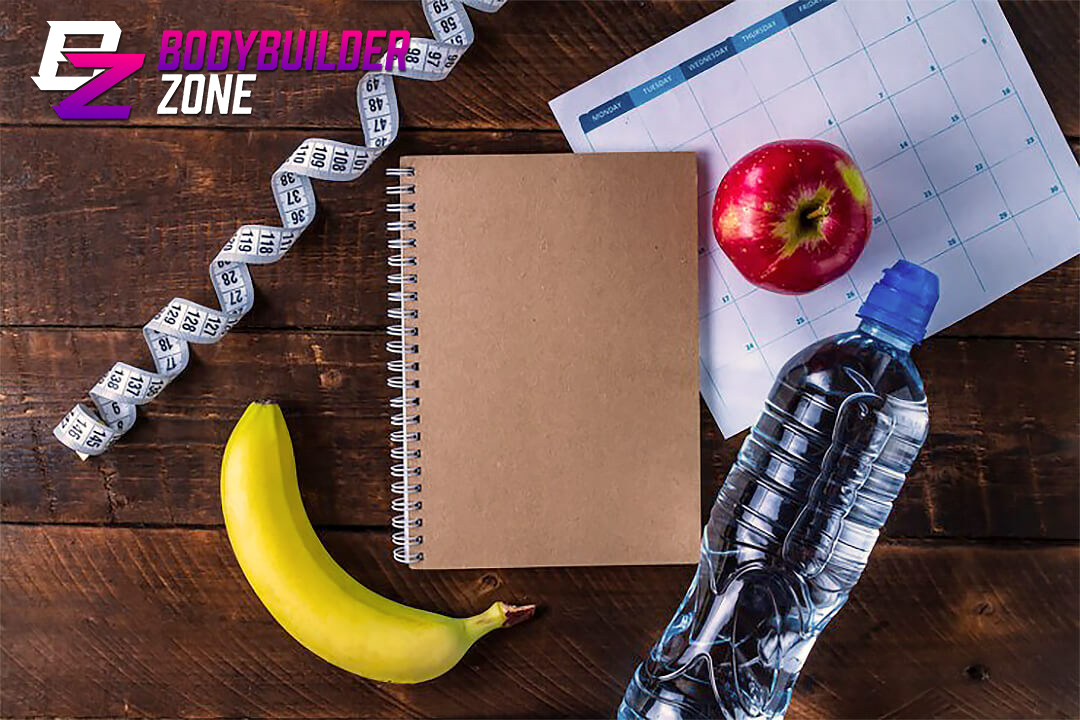
Get yourself a notebook in which you will write down all your body indicators. This includes weight measurements, time spent doing certain exercises, and muscle volumes. Try to measure these indicators every 2–3 weeks and enter them in a notebook, signing the dates.
Then compare them and, if there are positive dynamics, continue according to the existing workout program. If changes have stopped, this may mean that it is time to make adjustments to the training plan because it has become ineffective.
Making Adjustments to Your Routine
When you notice that your progress has stopped and your muscles are not growing or you are losing results, you need to make adjustments to your program. Let’s take a closer look at what to do in each of these cases:
- Progress has stopped
When progress is not moving forward, it’s time to increase the weight you are working with on the machines. This will create more stress on your muscles and put them into a state of hypertension. Thus, a gradual increase in weight will make your muscles grow. But do not resort to a sharp jump in weight, as there is a risk of injury.
- Rollback in results
This situation can scare an athlete, but there is always a solution. A rollback can indicate that mistakes have been made in the training plan. What exactly can cause progress to disappear? As a rule, these are ineffective exercises, incorrect technique, poor nutrition and stress.
As you can see, any situation is fixable, and it is very important to make changes to your program. The main thing is to notice in time when it is necessary to do this and not lose the progress obtained from the workout.
















Leave a comment